Magnetic fields likely played a far more important role in the formation of the solar system than previously recognized, according to a new study of the oldest known solids ever found. Researchers examining tiny magnetic minerals inside a primordial meteorite discovered in Antarctica have concluded that the protoplanetary disc — the swirling cloud of gas and dust from which the planets formed — carried a magnetic field several times stronger than the one on Earth today.
The findings, published in Proceedings of the National Academy of Sciences, suggest that simulations of planet formation have been missing a key physical ingredient. Planetary scientist Cauê Borlina of Purdue University, who led the research, said the evidence shows magnetic fields cannot be ignored when modeling how planetary systems condense and evolve.
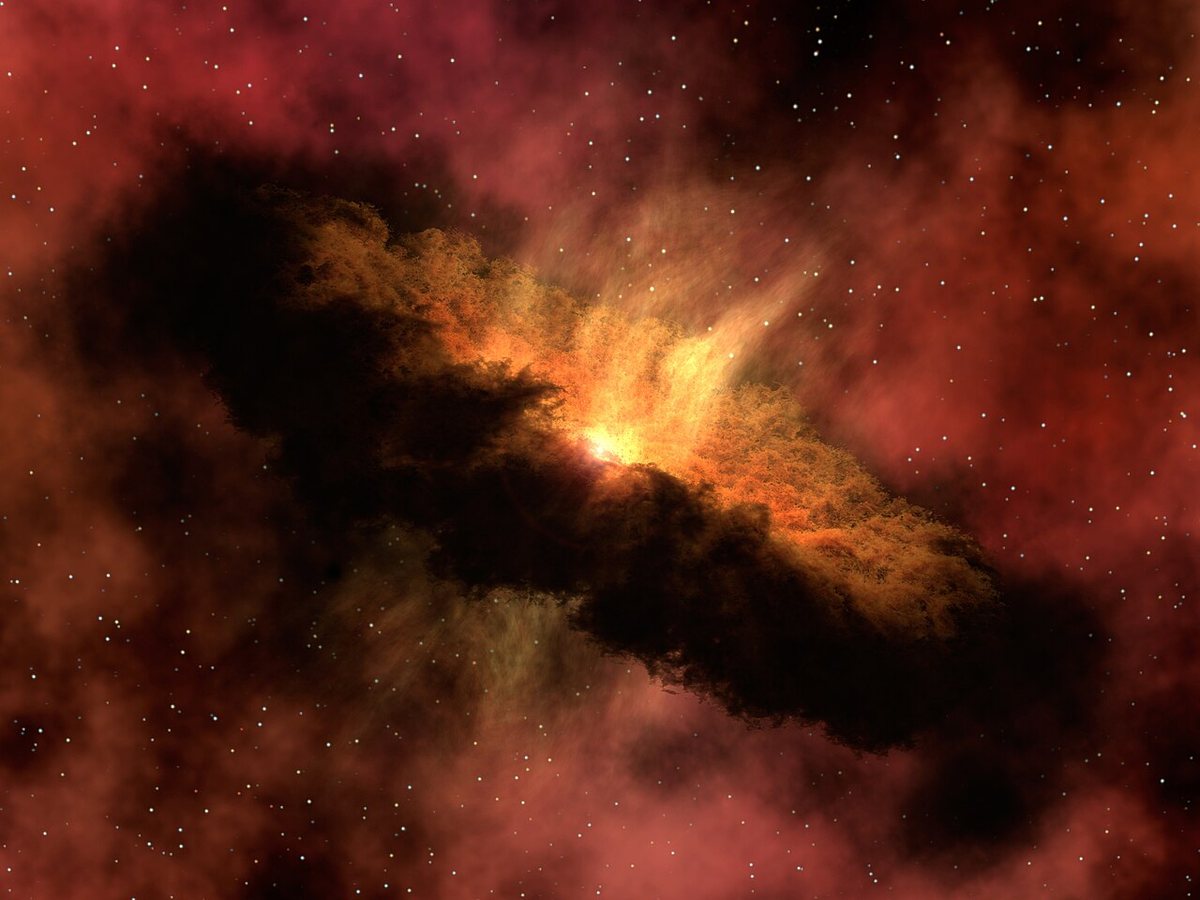
Planetary systems begin as high-temperature molecular nebulae that cool and accrete into planets around a central star. Even before the star ignites nuclear fusion, the gas in this disc is highly ionized, creating conditions where magnetic fields can emerge. Yet most simulations of disc formation omit magnetism, partly because it remains poorly constrained. As Borlina put it, it is easier to simply adjust gravity to match observed accretion rates than to account for magnetic effects.
The new study offers an unprecedented look at magnetic conditions in the terrestrial planet-forming region during the first 500,000 years of the solar system's existence, before Earth had formed. The researchers focused on calcium-aluminium-rich inclusions, the oldest known solar system solids. These inclusions contain minerals with extremely high melting points that condense early in the disc's history, making them rare in later stages.
Millions of years after these inclusions formed, they agglomerated with other material into planetesimals, some of which grew into planets. The remaining material accreted into chondrites, a class of meteorites distinguished by chemical composition. Carbonaceous chondrites are of particular interest because they are thought to preserve the most primitive chemical compositions of all meteorites.
The team studied inclusions in the Dominion Range 08006 carbonaceous chondrite, a 667-gram meteorite recovered from Antarctica in 2008. Until around 2010, such inclusions were believed to contain no magnetic minerals. Borlina and colleagues, however, found that some inclusions contained nanometre-scale amounts of ferromagnetic iron-nickel.
By measuring the thermoremanent magnetization of these grains — the field strength they recorded as they cooled through their Curie temperature — the researchers estimated the inclusions were exposed to magnetic fields of 150 to 600 microteslas. By comparison, Earth's current magnetic field measures roughly 30 to 60 microteslas.
Directly heating the meteorite to measure its magnetization proved impractical, as laboratory heating tends to oxidize the materials quickly. Instead, the team used an established technique called anhysteric remanent magnetization to derive the field strengths.
Meenakshi Wadhwa of the University of California, San Diego, who formerly directed the Center for Meteorite Studies at Arizona State University, called the work genuinely significant. She noted it provides the first definitive paleomagnetic signal from a carbonaceous chondrite and that the estimated field strength is multiple times higher than previous estimates. While the sample size is small — five inclusions from a single meteorite — she said the authors make a reasonably solid case for their conclusions.
Wadhwa added that the next step is to measure inclusions from other chondrite groups to test whether the signal is reproducible and whether it reflects a real nebular record rather than something localized to this particular meteorite. Pinning down when and where inclusions acquired their magnetization will also be important, she said.
The researchers are now studying other carbonaceous chondrites and other types of chondrite meteorites, some of which are thought to have formed in different regions of the protoplanetary disc. The goal is to build a fuller picture of how magnetism shapes disc evolution over time.
198