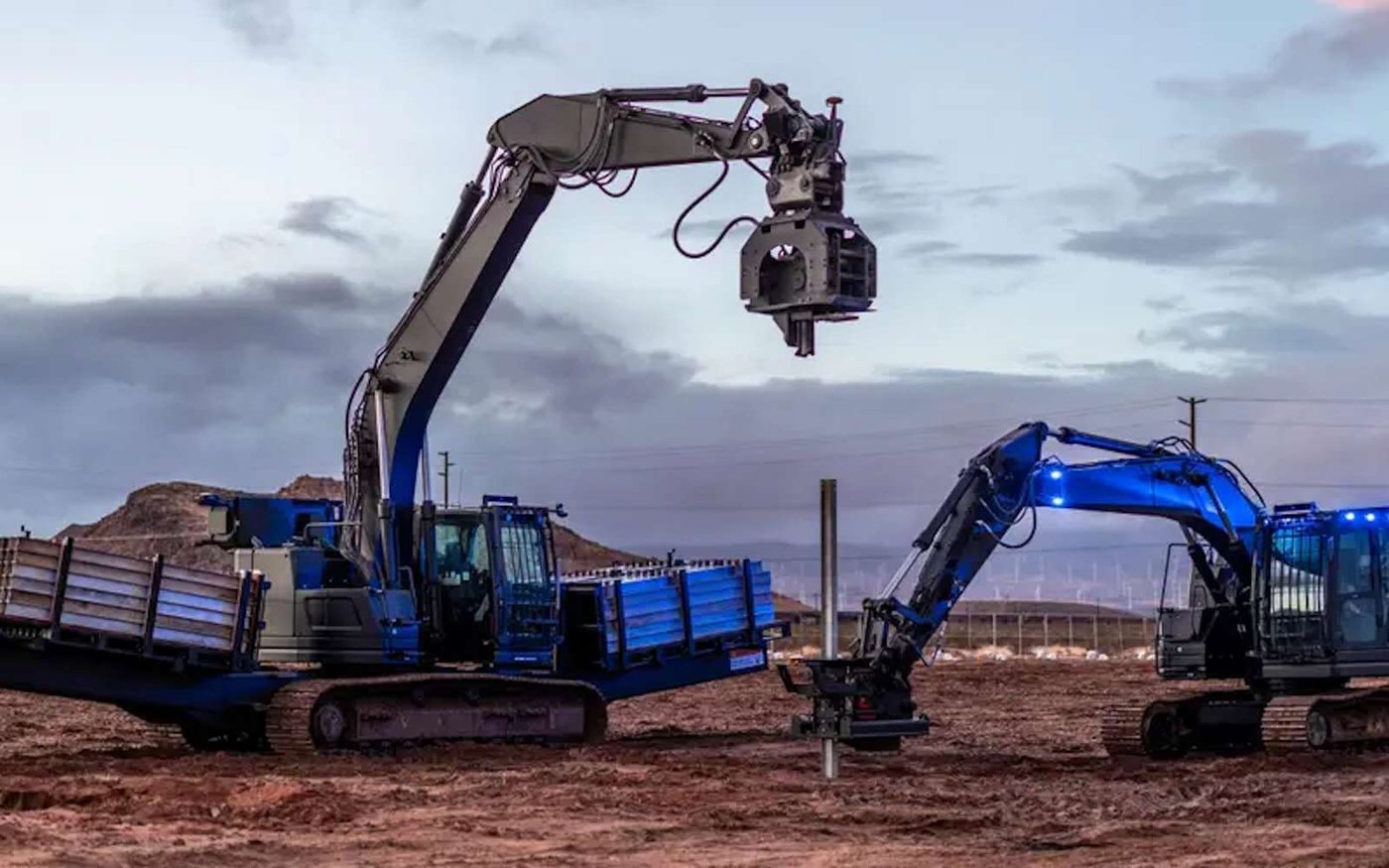
Meta has turned to autonomous construction robots to rapidly build the solar power infrastructure for Hyperion, its massive data center dedicated to artificial intelligence in Louisiana. The deployment of these self-operating machines reflects the company's urgent timeline and the persistent shortage of skilled labor in the construction industry.
The robots, which operate without direct human intervention, are tasked with installing solar panels at a pace far exceeding traditional methods. This automation allows Meta to accelerate the construction of the renewable energy plant that will supply electricity to Hyperion, a facility designed to support the immense computational demands of AI workloads.
Hyperion is part of Meta's broader strategy to expand its AI capabilities while meeting sustainability goals. The data center, located in Louisiana, is expected to consume significant amounts of power, and the solar plant is a key component of Meta's commitment to match its energy consumption with 100% renewable energy. The company has set a target of net-zero emissions across its value chain by 2030.
The autonomous construction vehicles used on the site are equipped with advanced sensors, GPS, and machine learning algorithms that enable them to navigate the terrain, handle solar panels, and perform installation tasks with precision. These robots can work around the clock without fatigue, significantly reducing the time required to complete the solar farm.
Industry experts note that the use of robotics in large-scale solar construction is still emerging but holds promise for addressing labor shortages that have plagued the renewable energy sector. The solar industry has faced challenges in finding enough trained workers to meet growing demand, particularly for utility-scale projects. Automation offers a way to bridge this gap while maintaining quality and safety standards.
Meta's approach also highlights the increasing convergence of AI and renewable energy infrastructure. The same technology that powers Hyperion's AI operations is being applied to build the energy source that will sustain it. This circular relationship underscores the growing interdependence between advanced computing and clean energy.
The solar plant for Hyperion is expected to be one of the largest of its kind in the region, though specific capacity figures have not been disclosed. Meta has previously invested in other large-scale solar projects, including a 225-megawatt solar farm in Texas and a 200-megawatt facility in Georgia, as part of its renewable energy portfolio.
Local officials in Louisiana have welcomed the project, citing job creation and economic benefits during both construction and operation. While the autonomous robots reduce the need for manual labor in some tasks, the project still requires human workers for oversight, maintenance, and other roles that cannot yet be automated.
The use of autonomous construction robots is not entirely new, but Meta's deployment on this scale for a solar project is notable. Companies like Built Robotics and SafeAI have developed autonomous systems for earthmoving and other construction tasks, but their application in solar panel installation is still relatively rare. Meta's initiative could serve as a test case for wider adoption in the renewable energy sector.
Environmental groups have generally supported Meta's renewable energy investments, though some have raised concerns about the overall environmental impact of data centers, including water usage and land use. Meta has stated that Hyperion will incorporate water-efficient cooling systems and other measures to minimize its ecological footprint.
The timeline for completion of the solar plant has not been publicly detailed, but the use of autonomous robots is expected to shorten the construction period by months compared to traditional methods. This speed is critical as Meta races to expand its AI infrastructure to compete with other tech giants like Google, Microsoft, and Amazon, all of which are investing heavily in both AI and renewable energy.
As the project progresses, Meta plans to share more details about the performance of the autonomous robots and the lessons learned. The company sees this as a potential blueprint for future renewable energy projects, not only for its own data centers but for the industry at large.
172