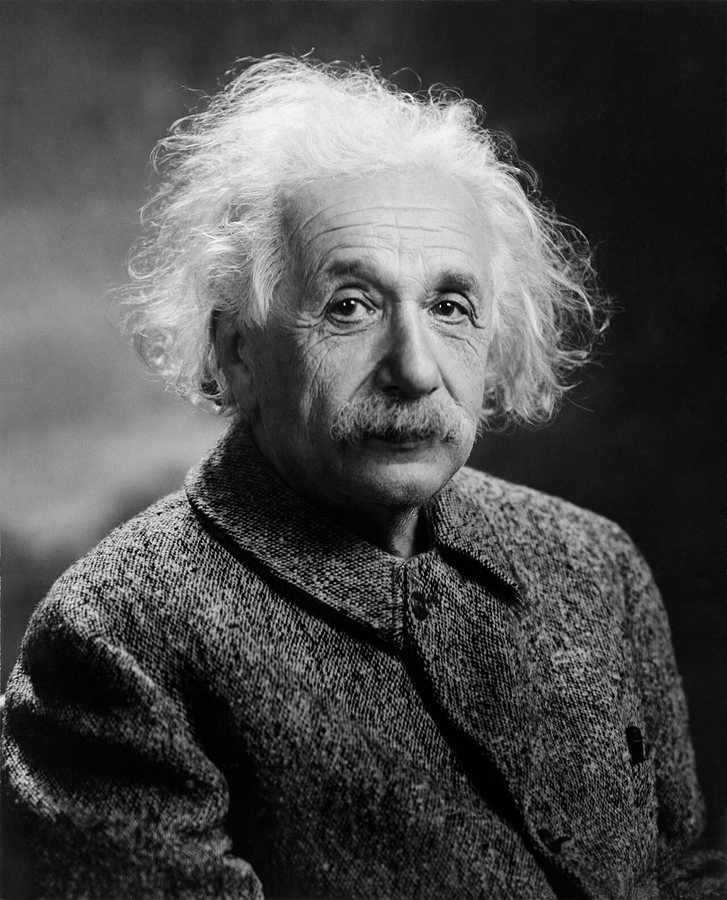
Physicists have developed a new method to produce a controlled beam of muonium, an exotic atom that could allow the first direct test of whether gravity acts on second-generation particles exactly as Albert Einstein's general theory of relativity predicts. Any deviation from the expected behavior would be a major surprise and could signal new physics, including a hypothetical fifth force.
Muonium is a short-lived atom composed of a positively charged muon — a heavier cousin of the electron — and an electron. Because it is electrically neutral and relatively long-lived compared to other exotic atoms, muonium can be manipulated and observed with precision. The new advance, reported by researchers, makes it possible to create a directed beam of these atoms, a crucial step toward measuring how they fall under gravity.
Testing gravity on second-generation particles has long been a challenge. Previous experiments have confirmed that ordinary matter, made of first-generation particles like electrons and up quarks, responds to gravity as Einstein's theory describes. But whether heavier counterparts such as muons follow the same rules remains an open question. Some theories that go beyond the standard model predict subtle differences that could show up as a tiny anomalous acceleration.
«The ability to form a controlled muonium beam is a significant technical milestone,» the researchers suggest, because it opens the door to interferometry or free-fall experiments sensitive enough to detect gravitational effects on individual muonium atoms. Such experiments would complement existing tests of gravity using neutrons, atoms, and antimatter.
If muonium falls differently than predicted, it could point to a fifth force — a new fundamental interaction beyond gravity, electromagnetism, and the strong and weak nuclear forces. Fifth-force hypotheses often involve new particles that couple differently to different generations of matter, which is why second-generation particles like the muon are prime targets for investigation.
The work is still at an early stage. The next steps involve refining the beam's properties, reducing background noise, and designing an experiment that can measure the free fall of muonium over a short distance. Even a null result would be valuable, placing tighter constraints on theories that predict violations of the equivalence principle.
Einstein's equivalence principle, which states that gravity affects all forms of energy in the same way, has passed every test so far. But the sheer difficulty of extending those tests to unstable, exotic particles means that a large portion of the particle spectrum remains unexplored. Muonium offers a rare opportunity to probe that gap.
The research is part of a broader effort to stress-test the foundations of modern physics. As experiments become more sensitive, they may either reinforce Einstein's picture or reveal cracks that lead to a deeper theory. For now, the successful creation of a muonium beam brings that possibility one step closer to reality.