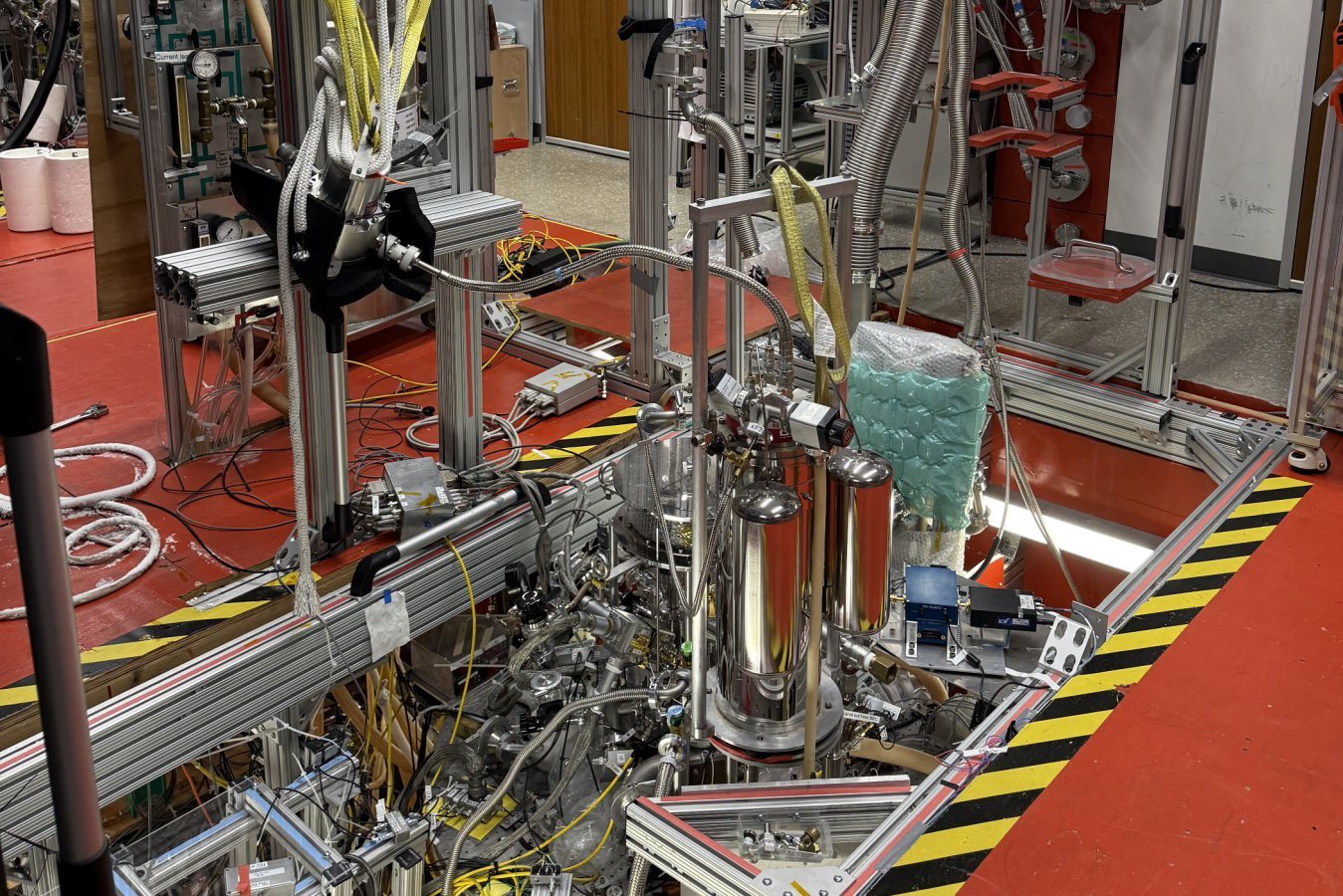
NASA has successfully created a fifth state of matter aboard the International Space Station, thanks to a significant upgrade to a compact quantum laboratory roughly the size of a mini-fridge. The achievement marks a major step forward in the study of quantum phenomena in microgravity, offering scientists a unique environment to explore the fundamental behavior of matter under extreme conditions.
The device, known as the Cold Atom Laboratory, has been operating on the ISS since 2018, but recent enhancements have allowed it to produce Bose-Einstein condensates — a state of matter where atoms are cooled to near absolute zero and behave as a single quantum entity. This exotic state, first predicted by Satyendra Nath Bose and Albert Einstein nearly a century ago, was only experimentally realized on Earth in 1995. In microgravity, however, scientists can observe these condensates for much longer periods, free from the distorting effects of gravity.
The upgrade involved improvements to the lab's laser cooling and magnetic trapping systems, enabling it to achieve even lower temperatures and greater control over the condensates. According to NASA, the Cold Atom Laboratory can now routinely produce Bose-Einstein condensates in orbit, opening the door to experiments that were previously impossible on Earth. Researchers hope to use the facility to study quantum mechanics, test fundamental physics theories, and investigate the nature of dark energy and dark matter.
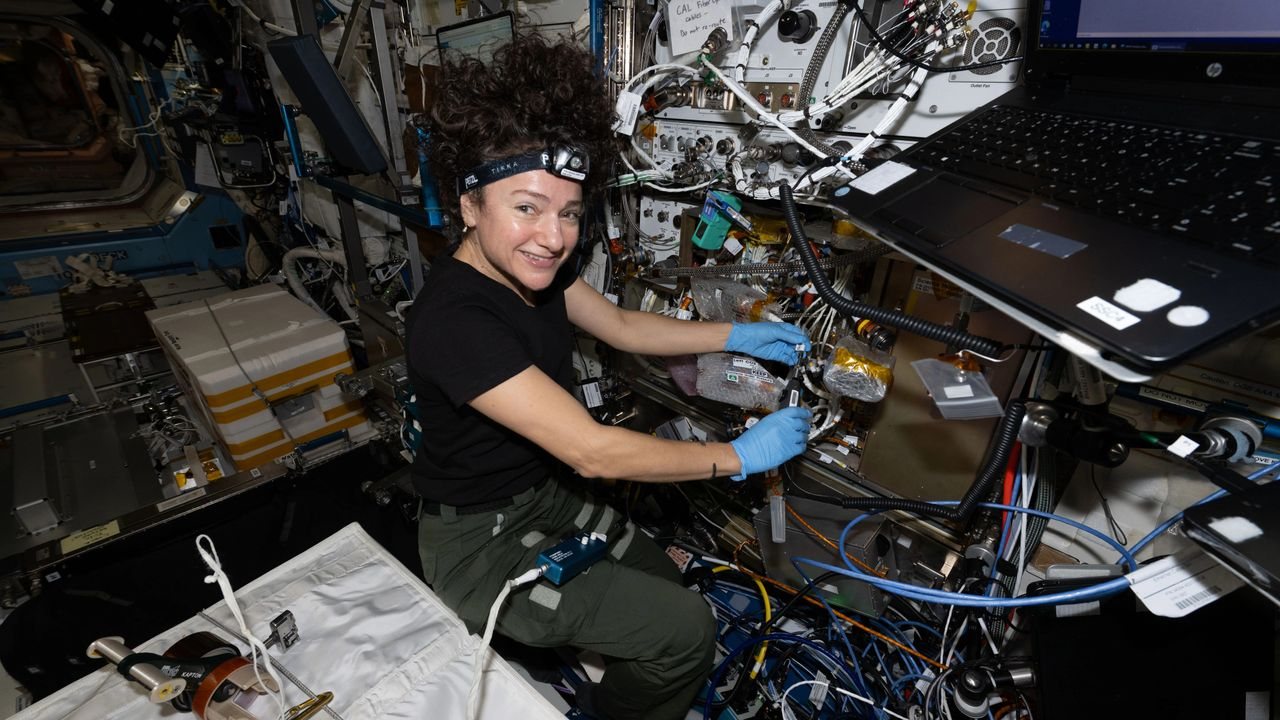
The Cold Atom Laboratory is operated remotely from Earth, with astronauts occasionally assisting in maintenance. The lab's small size and efficiency are key to its success, as it fits within a standard ISS experiment rack and consumes relatively little power. The ability to create and manipulate quantum states in space could lead to advances in precision measurement, navigation, and quantum computing.
One of the most promising applications of the upgraded lab is the study of atom interferometry, which uses the wave-like properties of atoms to make extremely precise measurements. In microgravity, atom interferometers could be used to test Einstein's theory of general relativity with unprecedented accuracy, or to detect gravitational waves. The Cold Atom Laboratory also allows scientists to explore the transition between classical and quantum physics, a frontier that remains poorly understood.
The achievement is part of a broader effort by NASA and other space agencies to harness the unique conditions of space for fundamental research. The ISS has long served as a platform for experiments in biology, materials science, and physics, but the Cold Atom Laboratory represents a leap forward in quantum research. The lab's success has already inspired plans for future missions, including dedicated quantum physics satellites that could operate independently of the ISS.
Alex Keshavarzi, a senior research fellow at University College London and a Royal Society University Research Fellow, has been involved in related experiments at Fermilab, including the Muon g-2 experiment, which earned him a Breakthrough Prize in Fundamental Physics in early 2026. While not directly part of the Cold Atom Laboratory team, his work highlights the growing interest in precision quantum measurements and their implications for understanding the universe.
The creation of a fifth state of matter in orbit is not just a technical milestone; it also provides a powerful tool for addressing some of the biggest questions in physics. By studying Bose-Einstein condensates in microgravity, scientists hope to gain insights into the nature of dark matter, the asymmetry between matter and antimatter, and the fundamental forces that govern the cosmos. The Cold Atom Laboratory's upgrade ensures that the ISS will remain at the forefront of quantum research for years to come.
113