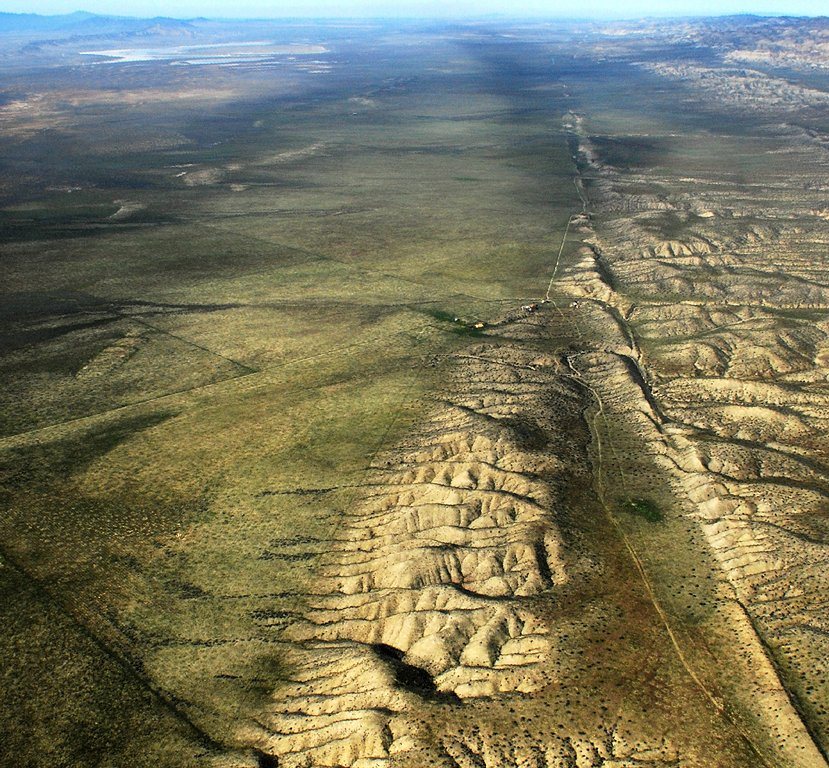
Stress on Southern California's San Andreas and San Jacinto faults has reached some of the highest levels recorded in a 1,000-year simulation, according to researchers who say the two systems are now highly stressed at the same time. The finding points to the Cajon Pass junction, where the faults meet, as a location that may be increasingly primed for a rupture that could cross both systems.
The study does not predict when an earthquake will happen. Its authors describe the result as a measure of accumulated stress over a long simulated period rather than a forecast, and they caution that elevated stress alone does not determine the timing of a future event.
What makes the result notable is the coincidence of high stress on both faults simultaneously. The San Andreas and San Jacinto are major components of Southern California's fault network, and the Cajon Pass junction is the point where their behavior becomes linked. A rupture that crosses that junction would involve more than one fault system, a scenario with different consequences than a break confined to a single fault.
The researchers frame the junction as an «earthquake gate» — a structural threshold that can either allow a rupture to continue from one fault onto another or stop it. Whether the gate opens depends on the stress state of the rocks around it. With both faults near their highest simulated stress levels, the study suggests the conditions at Cajon Pass deserve close attention.
The work is based on a simulation spanning 1,000 years, which gives scientists a long baseline for comparing present-day stress against the range of conditions the fault system has experienced. Within that record, the current state of the San Andreas and San Jacinto stands out as an extreme.
The study's authors are careful to separate stress from prediction. High stress does not mean an earthquake is imminent, and the research offers no timeline. Instead, the value of the finding lies in identifying where the fault system may be most vulnerable to a multi-fault rupture and in providing a target for continued monitoring.
Southern California's fault network is among the most closely watched in the world, and the San Andreas in particular has long been the focus of efforts to understand how stress accumulates and releases. The San Jacinto fault runs to the east of the San Andreas and has its own history of significant activity. Where the two interact, the behavior of one can influence the other.
The Cajon Pass junction sits in a region where the faults run close together, making it a natural place to study how ruptures might propagate across fault boundaries. The new simulation places that junction at the center of the story, suggesting that the combined stress state of the two faults is the key variable to track.
For now, the result adds to a growing body of research aimed at understanding multi-fault earthquakes, which can be more extensive and more complex than single-fault events. The study does not offer a date, a magnitude, or a probability. It offers a picture of a fault system under unusually high load — and a junction that may be the place where that load matters most.
13