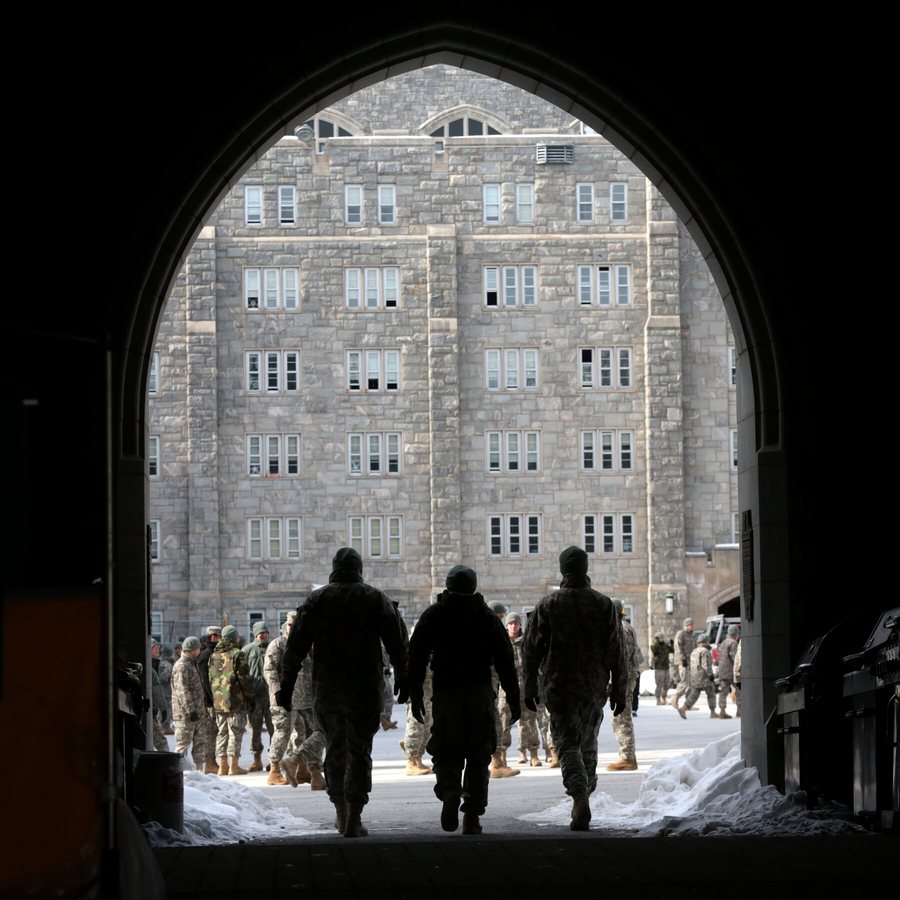
The only climate scientist teaching at West Point, the US Army’s military academy, was fired after he resisted an order to stop teaching about the human causes of the climate emergency, a lawsuit claims. Dr Adam Kalkstein, a civilian professor of geography at the New York institution, was terminated after the spring semester this year, six months after a testy meeting with Brig Gen Shane Reeves, then dean of West Point’s academic board, the court filing said.
Kalkstein compared the administration’s order to “trying to teach the law” without mentioning “the constitution.” The professor said he was fired for refusing to “defy science,” according to the lawsuit, which argues that the termination violated his academic freedom and scientific integrity. The case highlights growing tensions between military education and political pressure over climate science in the United States.
West Point, formally known as the United States Military Academy, trains future Army officers and has increasingly integrated climate considerations into its curriculum in recent years. Kalkstein, who taught geography and environmental science, was the sole climate scientist on the faculty, making his dismissal particularly consequential for cadets studying the subject. The lawsuit contends that his removal leaves a significant gap in the academy’s ability to educate officers about environmental risks that affect military operations and national security.
The confrontation with Reeves occurred during the fall semester, when the dean reportedly instructed Kalkstein to alter his teaching to exclude the established scientific consensus that human activity, primarily the burning of fossil fuels, is driving global warming. Kalkstein refused, saying that omitting the human causes would misrepresent the science and undermine the integrity of the education provided to cadets. The meeting ended without resolution, and Kalkstein’s employment was terminated at the end of the spring semester.
The lawsuit, filed in federal court, seeks Kalkstein’s reinstatement and damages, arguing that the Army violated his First Amendment rights and contractual obligations. Legal experts following the case note that it could set a precedent for how military academies handle politically sensitive scientific topics. The Department of Defense has not publicly commented on the specifics of the case, but the lawsuit alleges that the order to stop teaching human causes of climate change came from senior leadership seeking to align instruction with political directives.
Climate change has become a contentious issue in US military circles. The Pentagon has long recognized climate change as a “threat multiplier” that exacerbates conflicts, affects bases, and complicates logistics. However, political shifts have led to fluctuating policies on how openly the military discusses the human contribution to warming. Kalkstein’s case appears to be part of a broader pattern in which scientists and educators face pressure to downplay or omit the role of human activity in climate change.
Supporters of Kalkstein, including academic organizations and climate advocacy groups, have rallied behind him, calling the dismissal an attack on scientific integrity. They argue that cadets, who will go on to lead troops in regions affected by extreme weather, rising seas, and resource scarcity, need accurate climate education to make informed decisions. The lawsuit emphasizes that teaching the human causes of climate change is not a political statement but a factual necessity grounded in decades of peer-reviewed research.
Kalkstein’s legal team has requested a jury trial. The case is expected to draw attention from both scientific and political communities, as it touches on the intersection of education, military discipline, and the politicization of science. For now, the academy has not announced a replacement for Kalkstein, leaving the future of climate instruction at West Point uncertain.
103