The magnitude 7.4 earthquake that struck western Colombia on Aug. 10 did not end when the strongest shaking stopped. By Aug. 11, at least 224 people had been reported dead, hundreds were injured and rescue teams were still searching collapsed buildings while aftershocks continued.
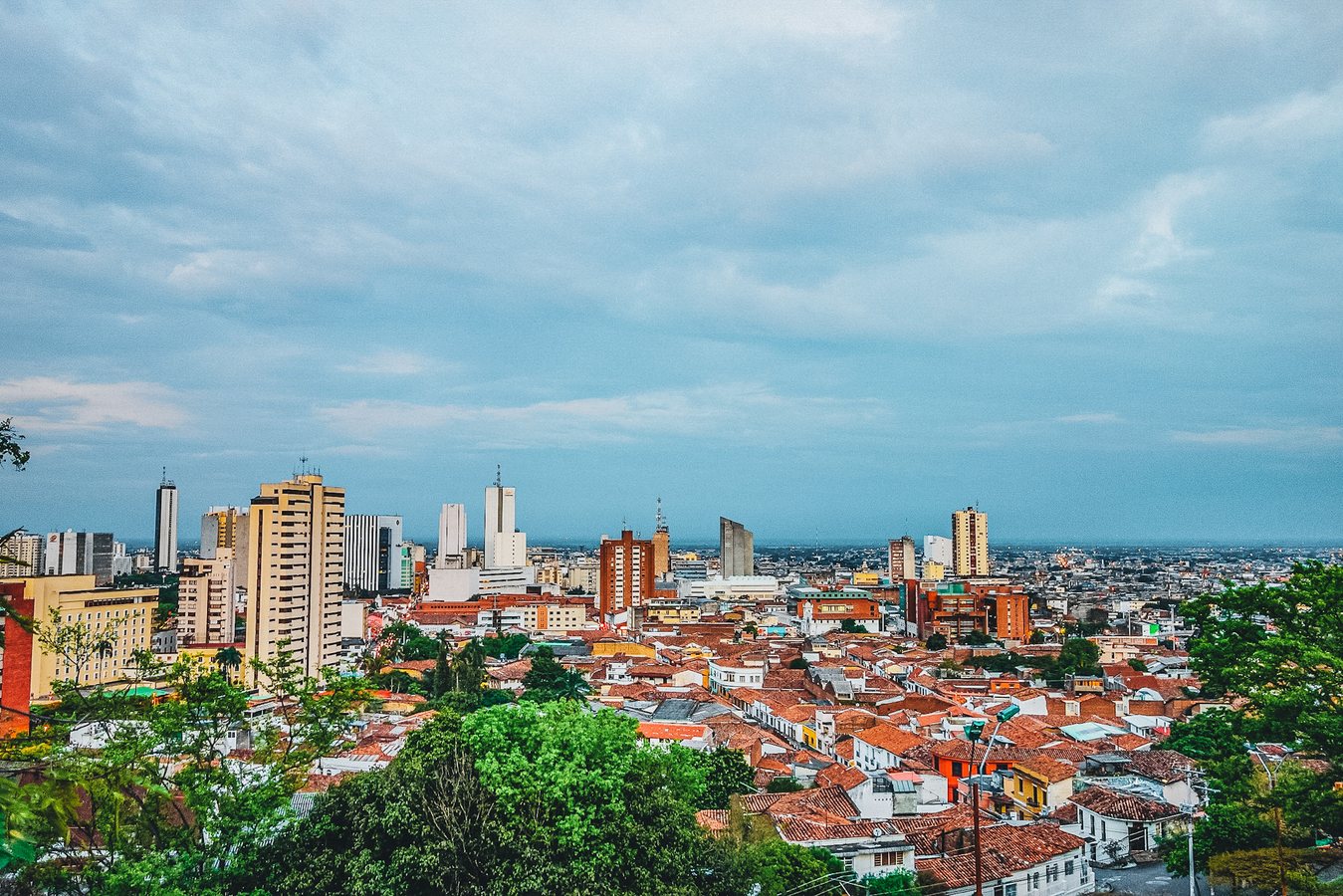
The earthquake occurred at about 7:34 a.m. local time, with the epicentral area near San José del Palmar in Chocó. Severe damage was reported in several parts of western Colombia, including Cali and Pereira. More than 3,000 people were listed as missing and around 1,600 buildings were reported damaged or collapsed.
A magnitude number describes the size of an earthquake at its source; it does not by itself predict how much damage a particular city will suffer. Destruction depends on many other factors, including distance from the rupture, depth, local soils, building design, construction quality and the duration and frequency content of shaking. That is why the same earthquake can produce very different outcomes across neighboring communities.
Western South America is one of the world’s major tectonically active margins. The U.S. Geological Survey describes the South American arc as the boundary where the Nazca plate is subducting beneath the South America plate. In the northern part of the arc, the relative motion is about 65 millimeters per year. That long-term convergence contributes to widespread deformation and frequent earthquakes along the western edge of the continent.
That regional setting does not, by itself, identify the exact fault or rupture mechanism responsible for the Aug. 10 event. Assigning a specific tectonic source requires an event solution based on seismic waveforms, depth, focal mechanism and other observations. What the broader setting does explain is why Colombia’s western region is exposed to substantial seismic hazard.
Aftershocks are the immediate scientific concern for rescue operations. El País reported that Colombia’s geological service had recorded 47 aftershocks by its evening update, with the largest reaching magnitude 4.8. Aftershocks are expected as the crust adjusts to stress changes caused by the main rupture, and they usually become less frequent with time, although individual events cannot be predicted precisely.
For an undamaged modern structure, a magnitude 4.8 earthquake may not be catastrophic. For a building that has already lost walls, columns or connections, the same shaking can be enough to trigger another collapse. That is why structural inspection is part of the emergency response and why residents should not assume that a standing building is automatically safe.
Rescue teams face a related engineering problem. Heavy equipment can remove debris quickly, but moving a slab may destabilize a void where a survivor is trapped. Search crews therefore have to balance speed with careful assessment, especially when aftershocks can alter the geometry of rubble piles.
President Abelardo de la Espriella declared a national emergency, and soldiers joined emergency workers and volunteers in the search. International assistance has also begun, including about $15.5 million announced by the United States.
In the coming days, seismologists will refine the physical picture of the earthquake while engineers examine which structures failed and why. For families in the affected cities, however, the most consequential science is immediate: identifying unstable buildings, tracking aftershocks and giving rescue teams the safest possible conditions to keep searching for people who may still be alive.
98