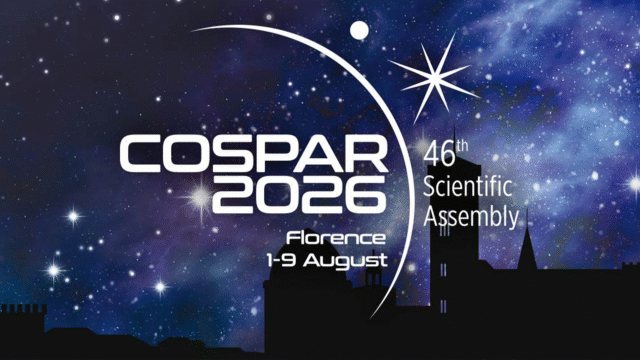
The 46th Scientific Assembly of the Committee on Space Research (COSPAR), the world's premier gathering for space science and exploration, officially opens on August 1, 2026, in Florence, Italy. The event returns to the Tuscan capital for the first time in 62 years, following previous editions held there in 1961 and 1964. For nine days, until August 9, Florence will host more than 3,000 participants — astrophysicists, planetary scientists, and aerospace engineers — who will present cutting-edge research and forge new international collaborations.
Organized by Italy's National Institute for Astrophysics (INAF) under the motto «Shaping the Future of Space Research», the assembly features more than 160 scientific events running in 30 parallel sessions each day. Researchers and technologists from 80 countries will deliver over 3,000 oral presentations on pioneering space research, along with some 600 poster sessions dedicated to new technologies, including artificial intelligence for managing the vast data streams from satellites and orbital missions. The opening ceremony is scheduled for the afternoon of August 3.
COSPAR President Pascale Ehrenfreund emphasized the assembly's role in fostering global cooperation. «Space research is one of humanity's greatest collective undertakings, and its progress depends on international collaboration,» she said. «The COSPAR Scientific Assembly embodies this spirit, bringing together scientists from around the world to expand knowledge, drive innovation, and inspire the next generation of discoveries.» INAF President Roberto Ragazzoni noted the dramatic advances since the last Florence assembly: «In those years we had just revealed the far side of the Moon, but our satellite had not yet been reached by humans. Today, on the verge of returning to the Moon after its conquest in the late 1960s, having reached virtually every corner of the Solar System with probes from Earth, and having revealed a profoundly different universe thanks to an extraordinary generation of space telescopes, we fully enter the so-called space economy.»
The assembly's scientific program is coordinated by the Scientific Programme Committee, chaired by Marco Tavani, with vice-chairs Francesca Altieri and Giancarlo Ghirlanda. The local organizing committee is led by Pietro Ubertini and Sofia Randich. Ubertini, who also serves as COSPAR vice-president, highlighted the scale of the event: «With over 160 scientific events planned in 30 parallel sessions per day, researchers and technologists from 80 different nations will present more than 3,000 oral contributions on cutting-edge space research and about 600 posters dedicated to new technologies, innovation driven by the use of AI to manage the enormous amounts of data from new satellites and missions in orbit and under development. This impressive program positions Florence as a center of global cooperation in space, more necessary than ever in light of recent international geopolitical tensions.»
The conference will host sessions covering the latest discoveries about the deep universe, planetary exploration missions, Earth climate studies from space, Sun-Earth relations and space weather, and the frontiers of the space economy and orbital sustainability. Tavani commented: «With COSPAR 2026, we bring to Florence the most advanced challenges of space research: from the primordial universe to the present one, from planetary exploration to the search for life outside our Solar System. It is an enormous challenge for human creativity that today uses big data and artificial intelligence for new space endeavors.»
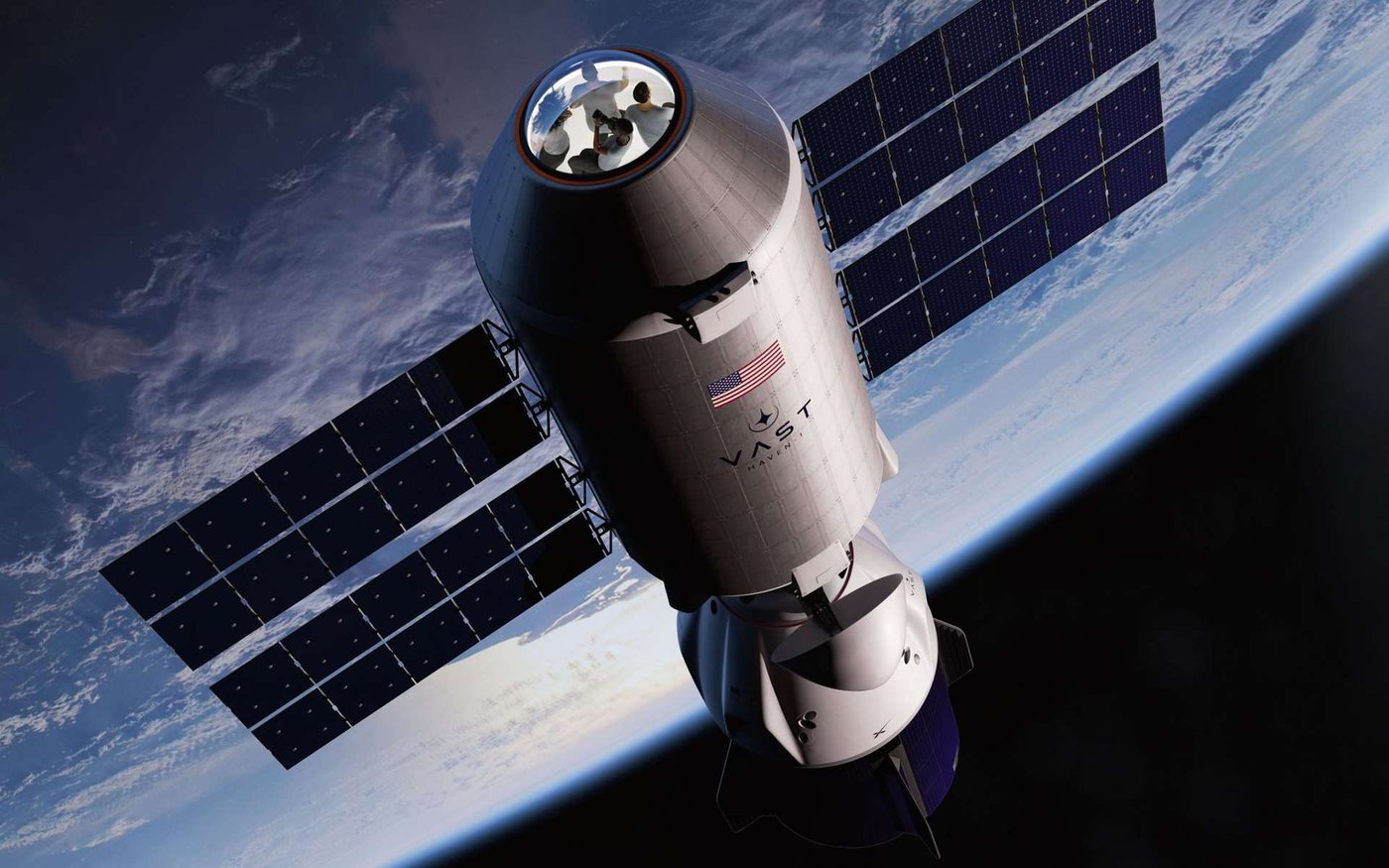
A special event, «Dark and Quiet Sky,» is scheduled for the morning of August 3, addressing the proliferation of satellite communication constellations that are profoundly altering the appearance of the sky and outer space. The session will discuss mitigation strategies to preserve astronomical observations and the natural night environment. The assembly underscores the growing intersection of science, technology, policy, and commercial activity in space, as the space economy expands with private operators and new orbital infrastructure.