China's Tianwen-3 Mars Sample Return mission has entered the prototype development phase, with scientific preparations underway, according to the project's chief scientist, Hou Zengqian, an academician of the Chinese Academy of Sciences. The mission is currently targeting a 2028 launch aboard two Chang Zheng 5 vehicles, with surface sampling in 2030 and samples returned to Earth around 2031.
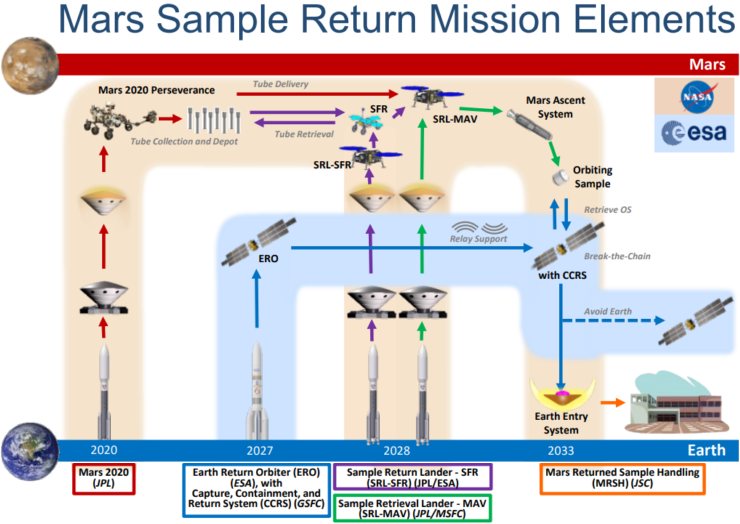
If successful, Tianwen-3 could become the world's first Mars sample return mission. Its primary scientific goal is to search for traces of past life on the red planet. The architecture calls for a lander to drill for samples and load them into an onboard small launcher that will carry them to orbit. A robotic arm on an awaiting orbiter would then retrieve the samples and load them into a return capsule that will separate and return to Earth. The approach is reminiscent of NASA's Mars Sample Return architecture shared in 2022, though without a rover pre-collecting samples from a wider range of locations.
The project faces daunting technical and scientific challenges, Hou noted, not least because Mars is significantly farther away than the Moon. The mission aims to drill two meters into the surface to collect subsurface samples, a task described as extremely difficult. Sampling from that depth better preserves primordial information and minimizes the effects of surface radiation, oxidation and weathering on potential biosignatures. Eight candidate landing sites have been selected based on factors including geological age, water history, habitability and the potential to obtain around 500 grams of high-value scientific samples.
The team will benefit from data collected by the Tianwen-1 orbiter over the past five years. Imagery from that orbiter is being compiled into a global geological map of Mars at a scale of 1:5,000,000, combining high-resolution imagery, spectroscopy and other multimodal information. The map is expected to be completed before the end of 2028. Samples will initially be analyzed at the Deep Space Exploration Laboratory in Anhui province before being distributed more widely to scientists.
China's lunar exploration program is also moving forward. The country officially handed over samples from the Chang'e 6 mission to the far side of the Moon to the United Nations this month. The samples, collected in June 2024, will be exhibited on permanent display at United Nations offices in Vienna. In addition, the China Manned Space Agency is now overseeing uncrewed robotic lunar missions previously managed by the China National Space Administration, starting with Chang'e 7, pooling personnel, resources and knowledge to benefit the lunar program.
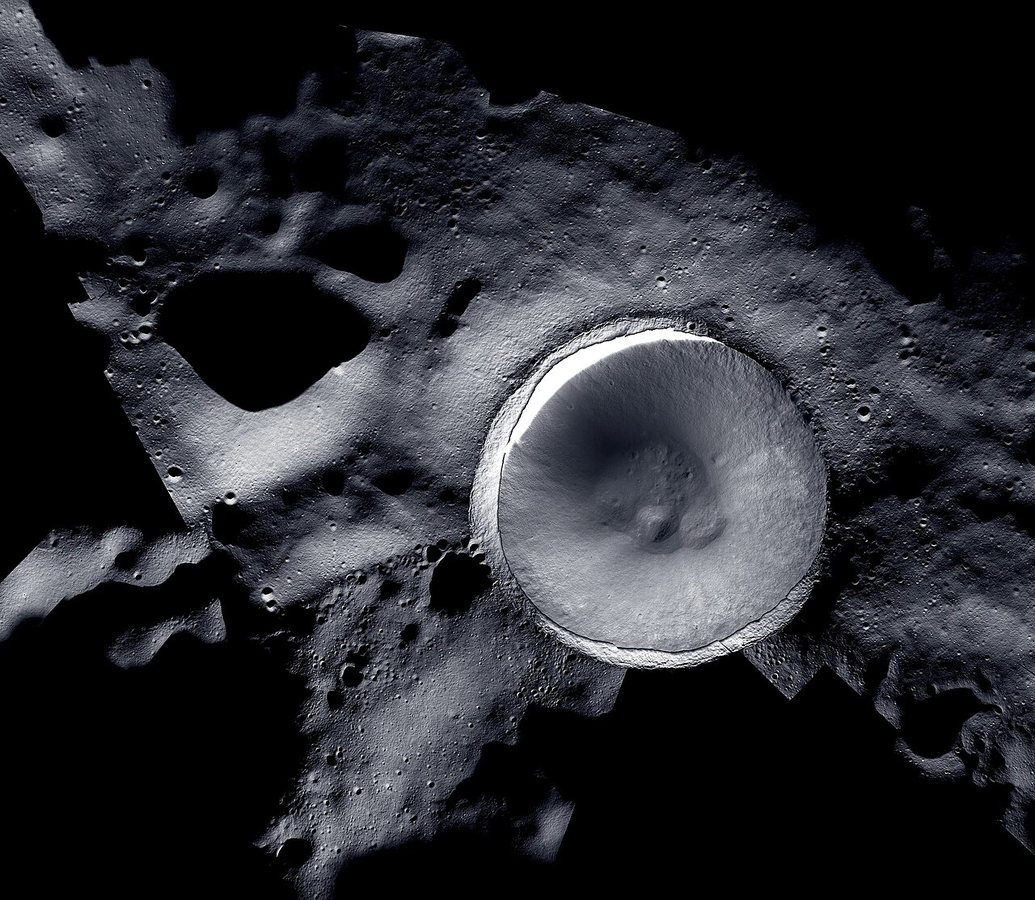
The planned Chang'e 7 launch was delayed in August after unfavorable local weather, and with unusually restrictive timing constraints it could no longer fly in its planned 2026 window. Its solar-powered lander and rover must reach the lunar south pole during a period of prolonged sunlight, while the low angle of the Sun must also provide suitable illumination for navigation and landing. Missing the tightly linked launch and landing windows has pushed the mission to no earlier than early 2027.
Learnings and hardware from the Chang'e missions will inform the design of future cargo landers set to fly between 2031 and 2035. Unconfirmed rumors circulated this month around Chang'e 8 being cancelled or its instruments being diverted to other earlier lunar missions, following comments by one team at September's Europlanet Science Congress. The mission had been designed to explore in-situ resource utilization near the lunar south pole, including experiments to demonstrate technologies for extracting and using local resources, such as turning lunar regolith into construction materials. It would work alongside Chang'e 7 to lay the groundwork for China's planned International Lunar Research Station.
Chang'e 8 attracted extensive international participation. The China National Space Administration selected 10 collaborative projects involving 11 countries and regions, with 200 kilograms of payload capacity made available to overseas partners. These include Pakistan's first lunar rover and a Turkish exploration rover, alongside instruments and experiments from Russia, Italy, Thailand, Bahrain, Egypt and Hong Kong, each of which has previously partnered on Chang'e missions. They are joined by experiments from Iran, South Africa and Peru. Chang'e 8 is currently officially scheduled for launch around 2029, targeting the Leibnitz-Beta Plateau near the lunar south pole.
Closer to Earth, a student-led spacecraft is taking shape for a 2029 flyby of the near-Earth asteroid Apophis. China also plans to further expand its spaceports, including support for an increase in sea launches, while investigating recent flight failures.