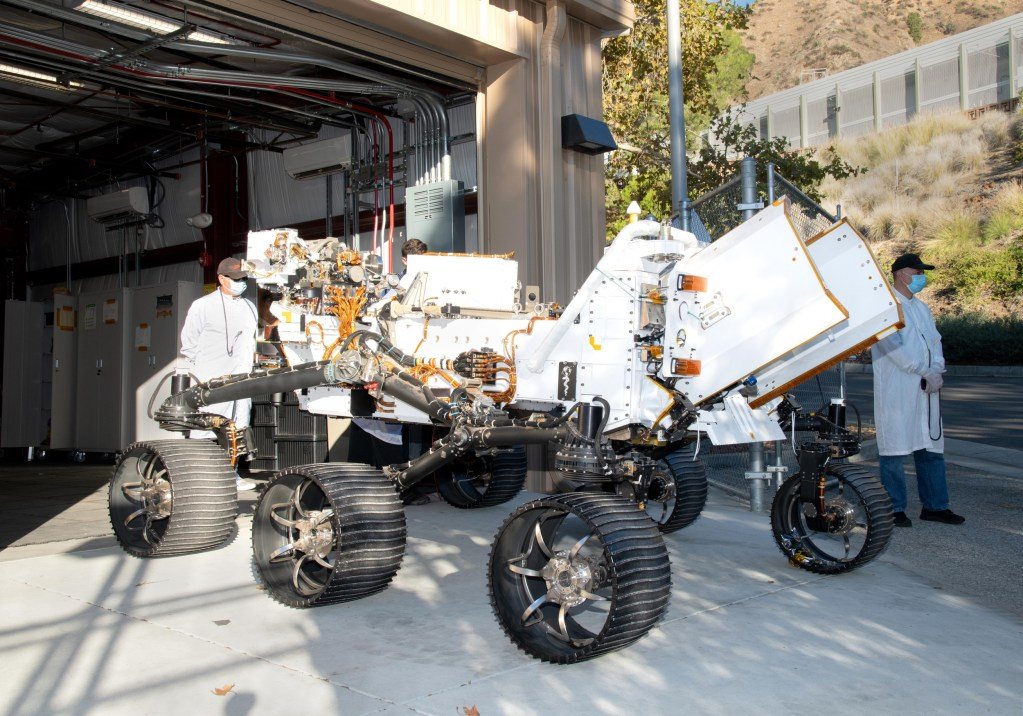
NASA would need to spend more than $1 billion to turn an engineering model of a Mars rover into a working lunar rover, according to a cost estimate that the agency’s administrator has strongly rejected. The figure has emerged in discussions about how the agency might put rover capabilities on the Moon without paying to develop an entirely new vehicle from scratch.
Engineering models are ground units used to test and verify the systems and operations of a spacecraft before a flight version is built. They are usually not designed to survive launch, operate in vacuum, or withstand the conditions of another planetary body. Turning such a unit into an actual lunar rover would mean upgrading much of its hardware, re-certifying its systems, and completing the development and testing process that NASA applies to flight hardware.
The work behind that process is what pushes the cost beyond $1 billion, according to the estimate. NASA’s administrator rejected that figure without accepting the analysis that produced it. The rejection is significant because cost evaluations of this kind normally serve as the basis for deciding whether a proposal is worth pursuing.
The price of adapting existing hardware depends heavily on the environment in which it will operate. A lunar rover differs from a Mars rover in several important technical ways, and a ground test model differs even more from a vehicle built for flight. Components would have to be selected or modified to cope with the Moon’s environment, and the complete system would need to pass the same reviews and certification steps required for any NASA rover.
In rejecting the estimate, the administrator focused on the cost figure rather than the broader idea of repurposing Mars rover engineering hardware. The disagreement leaves the proposal without an agreed budget baseline. Large cost estimates in space projects are often disputed because different assumptions about testing, schedules, staffing, and system requirements can lead to sharply different numbers.
The debate over the estimate comes as NASA explores a range of exploration options and faces budget limits. Reusing equipment originally built for one purpose is periodically proposed as a way to lower costs and speed up schedules. The idea of sending a repurposed Mars rover to the Moon fits into that broader pattern, but it also highlights why transfer between missions can be difficult: hardware built for ground testing, or for a different destination, may require expensive modifications before it can be considered safe and reliable.
Cost assessments for space hardware typically include not only the physical modifications but also program management, documentation, safety analysis, and verification activities. Those indirect costs can be substantial. A project can look attractive when evaluated solely on the basis of using an existing vehicle, and far less attractive once all of the engineering and administrative work required to make it flight-ready is included.
For now, the accepted official estimate for the conversion remains unclear. The only firm points in the public record are that one assessment puts the effort above $1 billion and that NASA’s leadership has explicitly rejected that assessment. Until a revised estimate is produced, any decision on whether to send a repurposed Mars rover to the Moon is likely to remain open.