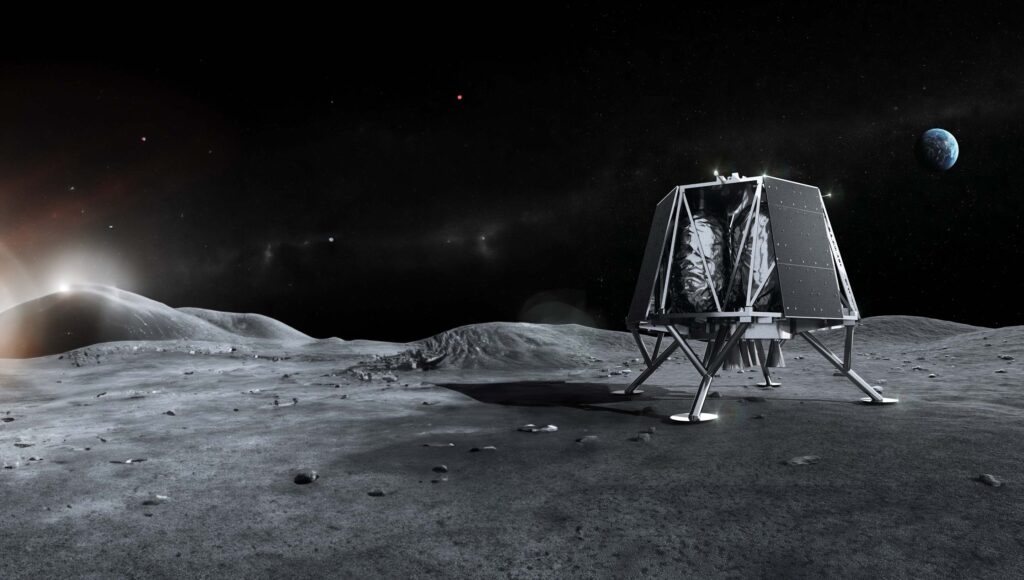
NASA and Draper have terminated their plans for a commercial lunar lander mission after significant delays in the development of the spacecraft, the agency announced. The decision ends a contract awarded under NASA's Commercial Lunar Payload Services (CLPS) initiative, which aimed to deliver scientific instruments to the Moon's surface.
The mission, known as the Draper SERIES-2 lander, was originally intended to carry NASA payloads to the lunar surface as part of the agency's broader Artemis campaign to return humans to the Moon and establish a sustainable presence. However, persistent delays in the spacecraft's development led both parties to conclude that the mission could no longer proceed within acceptable cost and schedule parameters.
NASA's CLPS program was designed to leverage commercial partnerships to deliver science and technology payloads to the Moon at a lower cost than traditional government-led missions. The program has seen both successes and setbacks, with some landers reaching the lunar surface while others have failed or been delayed. The termination of the Draper mission represents one of the more significant cancellations under the initiative.
Draper, a not-for-profit research and development organization based in Cambridge, Massachusetts, had been working on the SERIES-2 lander concept for several years. The company previously developed the SERIES-1 lander, which was selected by NASA in 2019 for a CLPS mission but was later descoped. The SERIES-2 lander was intended to be a more capable vehicle, capable of carrying larger payloads and operating for longer durations on the lunar surface.
NASA did not disclose the specific reasons for the development delays, but such issues are common in the commercial space industry, where technical challenges, supply chain disruptions, and funding constraints can slow progress. The agency emphasized that the termination was a mutual decision and that no further work would be performed under the contract.
The cancellation does not affect other CLPS missions currently in development. Several companies, including Intuitive Machines, Astrobotic, and Firefly Aerospace, continue to work on lunar lander missions under the program. Intuitive Machines successfully landed its Nova-C lander on the Moon in February 2024, becoming the first commercial company to achieve a soft landing on the lunar surface. Astrobotic's Peregrine lander, however, failed to reach the Moon after a propulsion anomaly shortly after launch in January 2024.
The CLPS program has faced criticism from some lawmakers and industry observers who argue that the fixed-price contracts and aggressive timelines have led to high failure rates. NASA officials have defended the program, noting that it is designed to accept a certain level of risk in exchange for lower costs and faster innovation. The agency has also pointed to the successes of the program, including the delivery of NASA payloads to the Moon by Intuitive Machines.
Draper's involvement in lunar exploration extends beyond the terminated mission. The company has a long history of work on guidance, navigation, and control systems for NASA spacecraft, including the Apollo program's lunar module. Draper also continues to develop technologies for future lunar missions, including precision landing systems and autonomous navigation capabilities.
The termination of the Draper mission highlights the challenges of commercial lunar exploration, where technical complexity, tight budgets, and ambitious schedules can lead to delays and cancellations. Despite these setbacks, NASA remains committed to the CLPS model as a key component of its lunar exploration strategy. The agency has awarded multiple CLPS contracts in recent years, with additional missions planned for the coming decade.
NASA's Artemis program, which aims to land the first woman and the next man on the Moon by the mid-2020s, relies heavily on commercial partnerships for transportation, logistics, and science. The CLPS program is seen as a critical enabler for Artemis, providing a means to deliver payloads to the lunar surface ahead of crewed missions. The termination of the Draper mission does not directly impact Artemis timelines, but it underscores the risks inherent in relying on commercial providers for critical capabilities.
Draper has not announced any plans to continue development of the SERIES-2 lander independently. The company may seek other customers or partnerships for the technology, but no such agreements have been disclosed. For now, the termination marks the end of a chapter in Draper's lunar ambitions, though the company remains active in other areas of space exploration and national security.
The broader context of the cancellation includes ongoing debates in Congress about the funding and direction of NASA's lunar programs. Some lawmakers have expressed concerns about the reliance on commercial providers, while others have pushed for increased investment in government-led projects. The termination of the Draper mission is likely to fuel further discussion about the balance between commercial and government-led approaches to space exploration.
Despite the setback, NASA continues to move forward with its lunar exploration plans. The agency is preparing for the Artemis II mission, which will send astronauts around the Moon, and the Artemis III mission, which aims to land astronauts near the lunar south pole. These missions, along with the CLPS program, represent the next chapter in human exploration of the Moon.
186