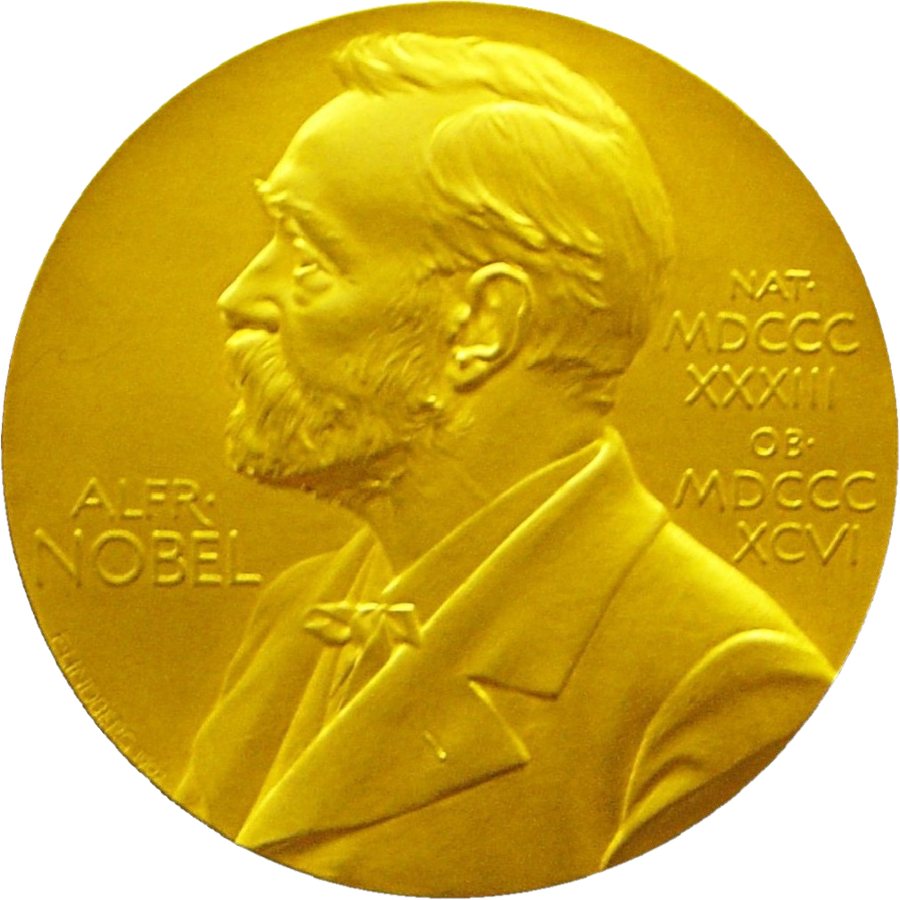
The 2026 Nobel Prize in Physics has been awarded to Francis Halzen, a professor at the University of Wisconsin, for his decisive contributions to the IceCube Neutrino Observatory and the discovery of high-energy neutrinos of astrophysical origin. The announcement from the Royal Swedish Academy of Sciences recognizes decades of work that transformed a theoretical vision into one of the most productive observatories in modern astrophysics.
Neutrinos are among the most elusive particles known to science. They interact only reluctantly with matter, and when they do, they emit a characteristic tiny flash of light. The challenge for physicists is that other particles produce similar flashes when they interact with matter, making it difficult to isolate neutrino signals from the noise. Halzen's insight was to use the entire Earth as a filter. Because neutrinos interact so seldom, they can pass through the planet unimpeded, while other particles cannot. By detecting the rare flashes of light produced when neutrinos interact with matter, researchers could identify these ghostly particles and trace them back to their cosmic sources.
The second part of Halzen's vision involved building a detector capable of capturing those faint flashes. He realized that the ultra-clear ice deep in the glaciers at the South Pole would transmit the light perfectly. More than two decades after he first proposed the idea, the IceCube Neutrino Observatory became a reality. The detector, embedded in a cubic kilometer of Antarctic ice, has been collecting valuable data ever since. That data has now been recognized as worthy of a Nobel Prize.
The award highlights the growing field of neutrino astronomy, which offers a unique window into the most violent and energetic events in the universe. Unlike light, which can be absorbed or deflected by dust and gas, neutrinos travel essentially unimpeded across cosmic distances. They carry information about processes that are otherwise invisible, from the hearts of exploding stars to the environments around supermassive black holes. IceCube's discovery of high-energy astrophysical neutrinos opened this new observational channel, and the Nobel Committee's decision underscores its importance.
For the neutrino astronomy community, the recognition is a milestone. Halzen has been a central figure in the field for decades, and his work has inspired a generation of researchers. The IceCube observatory continues to operate, and its data have already led to numerous findings about the sources of cosmic rays and the nature of the universe's most powerful particle accelerators. The prize also draws attention to the broader value of large-scale international scientific collaborations, which are essential for projects of this magnitude.
The Royal Swedish Academy of Sciences cited Halzen «for decisive contributions to the IceCube Neutrino Observatory and the discovery of high-energy neutrinos of astrophysical origin.» The award places neutrino astronomy alongside other Nobel-recognized fields such as gravitational-wave astronomy, signaling a new era in multi-messenger astrophysics. As researchers continue to analyze IceCube data and plan next-generation detectors, the 2026 Nobel Prize serves as both a celebration of past achievements and a catalyst for future discoveries.
15