The 2026 Nobel Prize in Physics has been awarded to Francis Halzen for his decisive contributions to the IceCube Neutrino Observatory and the discovery of high-energy neutrinos of astrophysical origin. The announcement marks the fifth time a Nobel Prize has been given for work related to neutrinos, underscoring the scientific community's enduring fascination with these elusive particles.
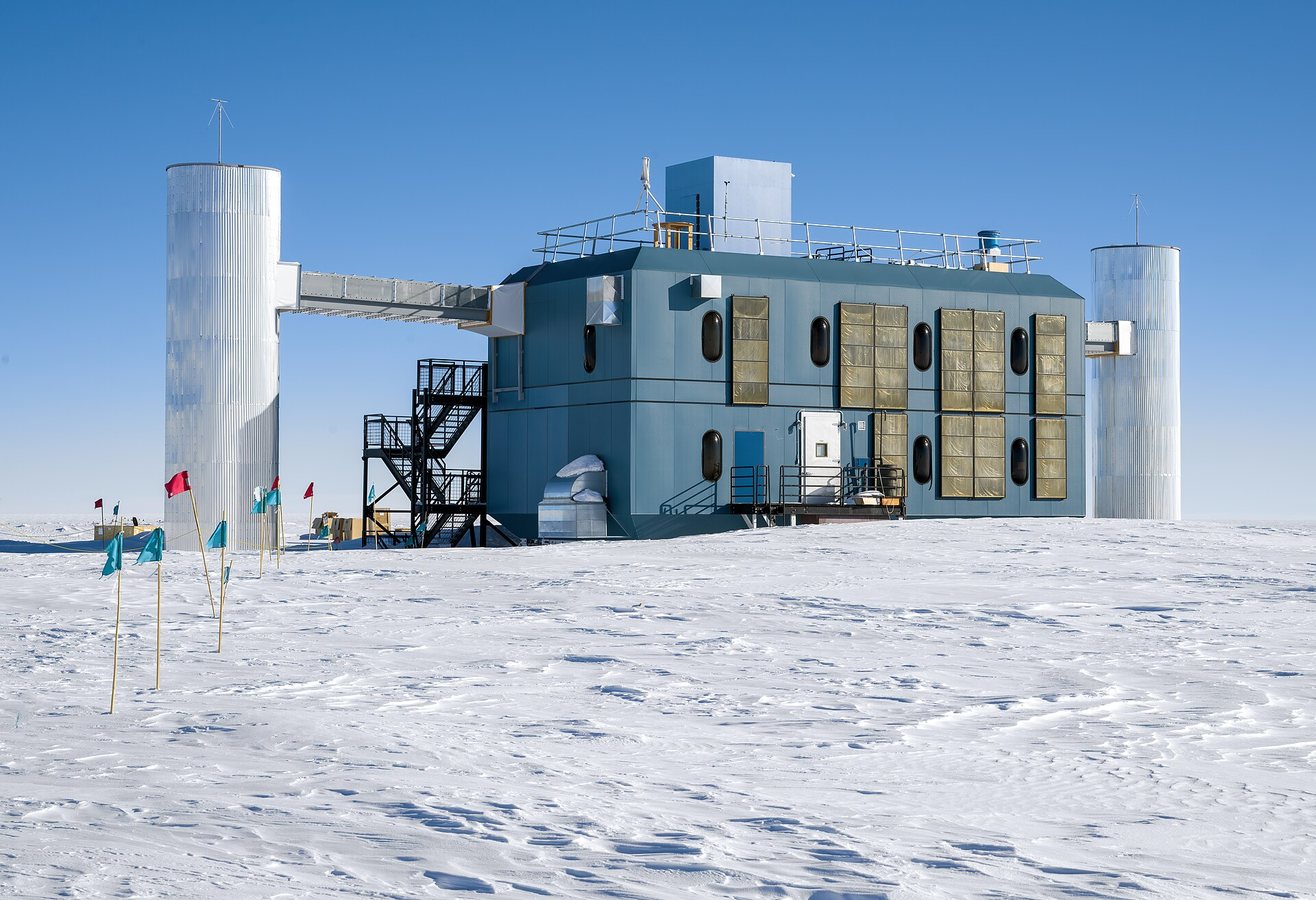
Halzen, a physicist at the University of Wisconsin–Madison, has spent decades pursuing neutrinos — ghostly, nearly massless particles that rarely interact with matter. The IceCube observatory, buried deep in the Antarctic ice at the South Pole, was designed to detect the faint flashes of light produced when neutrinos collide with ice molecules. In 2013, the collaboration announced the first observation of high-energy neutrinos from beyond our solar system, opening an entirely new window on the universe.
The prize recognizes not only Halzen's leadership but also the broader significance of neutrino astronomy. Unlike light, which can be absorbed or scattered by dust and gas, neutrinos travel essentially unimpeded across cosmic distances. They carry information about the most violent events in the cosmos — supernovas, black holes, and active galactic nuclei — that would otherwise remain hidden.
Speaking on the Physics World Weekly podcast, University of Oxford neutrino physicist Kirsty Duffy and Physics World's Matin Durrani joined host Hamish Johnston to discuss the award. The conversation explored why neutrinos have repeatedly captured the attention of the Nobel Committee. Previous prizes honored the discovery of the neutrino, the detection of a second type of neutrino, the discovery of neutrino oscillations, and the confirmation that neutrinos have mass.
Duffy, who presents the Even Bananas video series about neutrinos, noted that these particles remain at the frontier of particle physics. Their strange properties — including the ability to change flavor as they travel — challenge the Standard Model and hint at new physics beyond it. Each Nobel Prize in this area has marked a major step in understanding both the universe's smallest particles and its largest structures.
Halzen's book Quarks & Leptons, co-authored with Alan Martin, has been a standard reference for generations of particle physicists. His career bridges theoretical work and experimental leadership, a combination that proved essential for building and operating IceCube, a detector spanning a cubic kilometer of Antarctic ice.
The IceCube observatory continues to collect data, and its findings have spawned a new field of multimessenger astronomy, in which neutrinos are studied alongside cosmic rays and gravitational waves. The 2026 prize thus celebrates not just a single discovery but the rise of an entirely new way of observing the universe.
12