Physicists have recreated the universe's earliest moments in a particle collider, producing a surprising result that challenges expectations about the primordial soup that filled the cosmos just after the Big Bang.
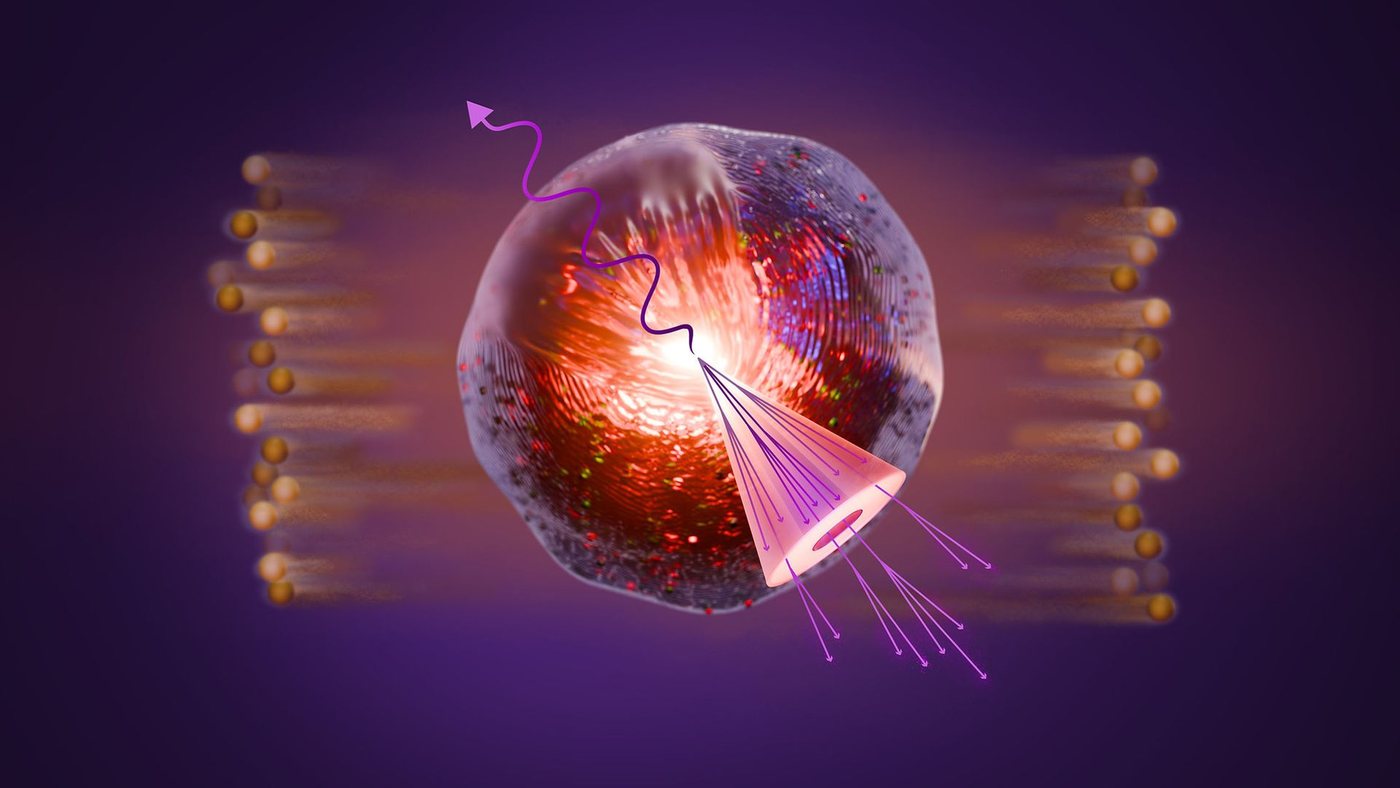
The experiment, conducted at a particle collider, generated conditions resembling the universe's first instants by smashing heavy ions together at near-light speeds. These collisions create a fleeting state of matter known as quark-gluon plasma, a superhot, dense soup of fundamental particles that existed microseconds after the Big Bang. The findings, reported by Live Science, indicate an unexpected twist in how this primordial matter behaves.
Quark-gluon plasma is a state where quarks and gluons, normally confined inside protons and neutrons, roam freely. By recreating it, scientists can study the fundamental forces and particles that shaped the early universe. The unexpected result suggests that current theoretical models may be missing a key ingredient, potentially altering our understanding of cosmic evolution.
Separately, new simulations reported by ScienceDaily suggest that tiny magnetic fields created shortly after the Big Bang could help explain a long-standing disagreement over the universe's expansion rate. These primordial fields may have influenced the formation of hydrogen in the early universe, affecting the cosmic microwave background — the afterglow of the Big Bang — and the expansion rate inferred from it.
The expansion rate discrepancy, known as the Hubble tension, has puzzled cosmologists for years. Measurements from the local universe, such as those from supernovae, yield a higher expansion rate than predictions based on the cosmic microwave background. If primordial magnetic fields altered hydrogen formation, they could bridge this gap by changing how we interpret the cosmic microwave background data.
Together, these findings highlight how particle physics and cosmology are converging to probe the universe's first moments. Collider experiments recreate the extreme conditions of the early universe, while simulations model the effects of primordial fields on later observations. Both approaches aim to refine our understanding of the cosmos's origin and evolution.
The unexpected twist in the collider experiment may point to new physics beyond the standard model, while the magnetic field simulations offer a potential solution to the Hubble tension. Further experiments and observations will be needed to confirm these ideas, but they already suggest that the universe's infancy was more complex than previously thought.
Researchers emphasize that these are early results, and more data is required to draw firm conclusions. Yet the fact that both studies independently point to unexpected phenomena in the early universe underscores how much remains to be learned about the cosmos's first moments.
11