The first photograph of Earth taken from space was made possible by a rocket born of the Second World War. The space age began in the shadow of the German V-2, the weapon that rained destruction on European cities. Shortly after the war ended, one of these rockets was repurposed to show what the new technology could offer beyond conflict.
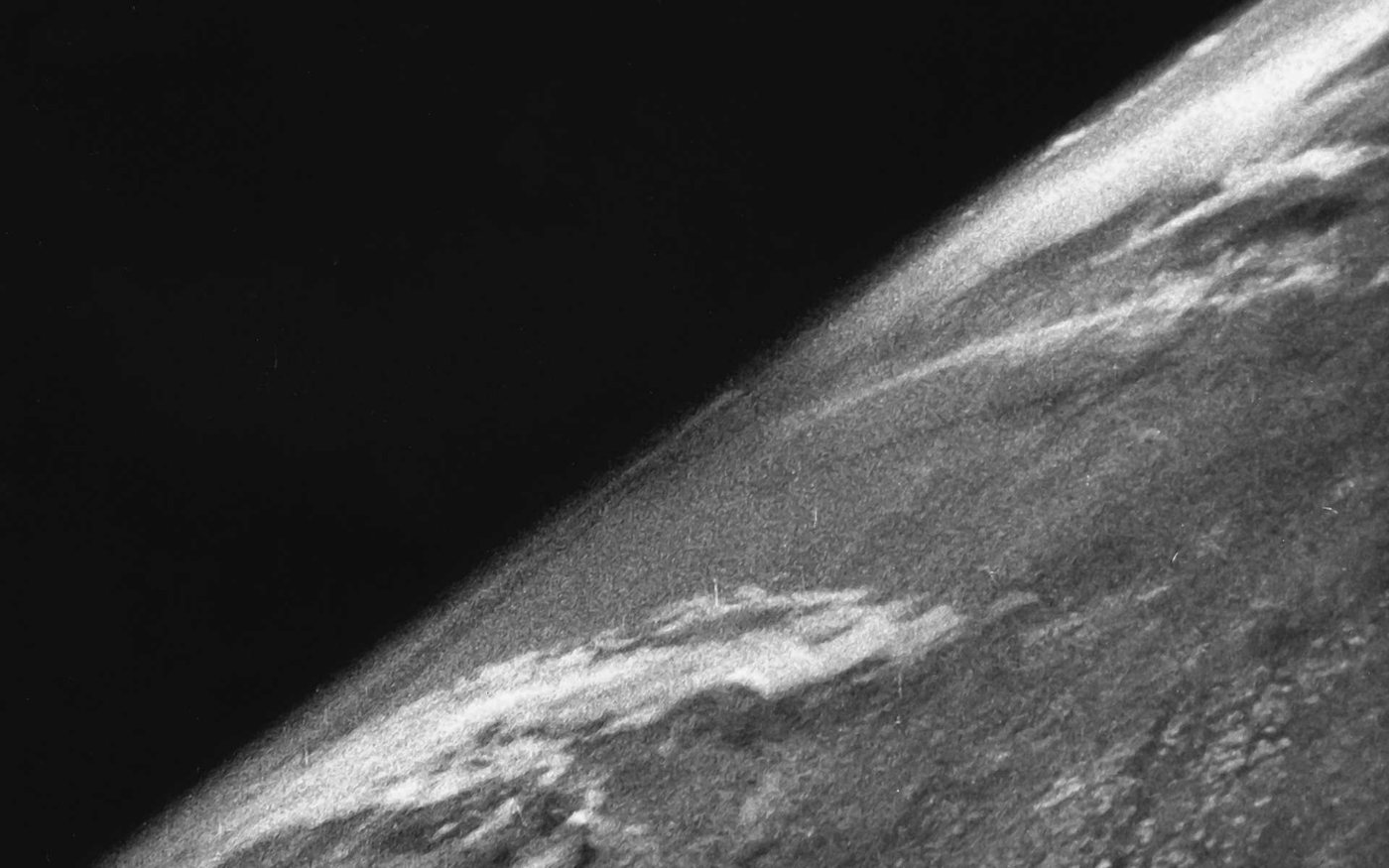
The V-2 was developed in Nazi Germany as a long-range ballistic missile. At the end of the conflict, a number of these rockets fell into American hands, and the United States took them to New Mexico to test them. Engineers equipped one of the rockets with a camera designed to photograph the ground as the vehicle climbed above the atmosphere. The flight carried the camera high enough to record a view of the Earth's surface that had never been seen before from that vantage point.
The resulting image marked a turning point. It showed the curvature of the planet and the broad expanse of terrain below, a perspective captured for the first time by a machine launched from the ground. The photograph gave scientists a new way to study the land, the weather, and the shape of the Earth as a whole. It also demonstrated that a technology developed for destruction could be turned toward observation and discovery.
The story behind the picture is as striking as the image itself. A weapon built to kill became the vehicle that opened humanity's first view of its home planet from above, and the photograph remains a reminder of how quickly the dual nature of new technologies can emerge. The wartime rocket experiments laid groundwork for the satellites, crewed spaceflight, and orbital imaging that followed in the decades after the war.
The first Earth photograph from space is a reminder that spaceflight did not begin as a scientific project. It emerged from a military program whose engineers were later put to work on questions of exploration and observation. That shift in purpose, from delivering explosives across Europe to recording the planet below, defines the early history of the field and explains why its origins still draw attention today.
15