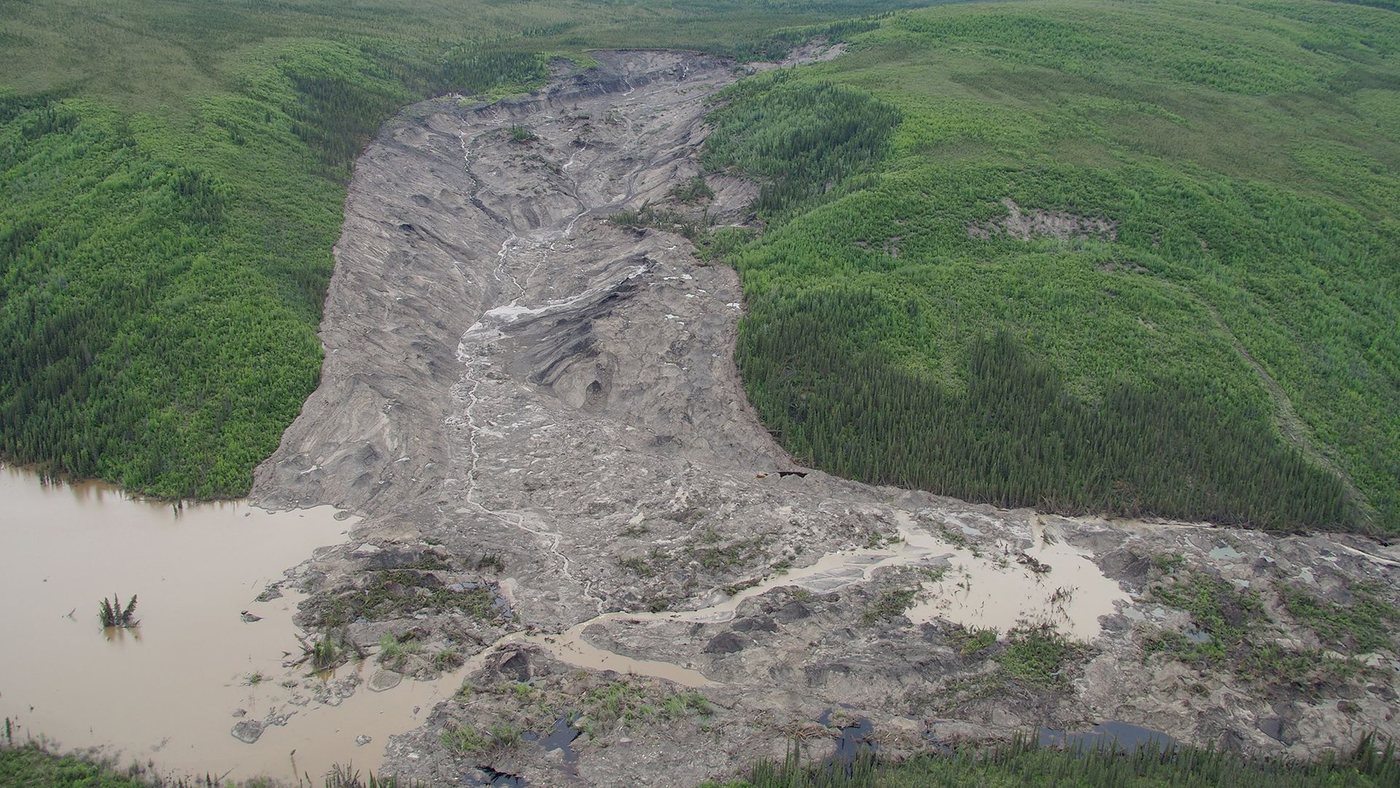
Climate change has triggered landslides in Canada's frozen ground that carry blocks of ice the size of houses, a phenomenon scientists are calling "permafrost landslides." Researchers say the events offer a potential glimpse of how warming temperatures could reshape northern landscapes in the decades ahead.
Permafrost, ground that stays frozen for at least two consecutive years, is particularly sensitive to rising temperatures. As it thaws, the ice that bound soil and sediment together melts, weakening slopes and allowing large sections of earth to slide. In the cases described, the moving material includes massive blocks of ice that were once locked within the ground.
The findings highlight a process that can accelerate quickly once thaw reaches a critical point. Because the blocks are so large, the slides can move significant volumes of material and alter terrain in a short period, with consequences for the surrounding environment and for any infrastructure nearby.
Scientists studying the sites say the events are a clear sign that the Arctic and subarctic are changing faster than many models anticipated. They warn that as warming continues, similar slides may become more frequent across regions underlain by permafrost, affecting ecosystems, waterways and human communities that depend on stable ground.
16