Excavators at the ancient Roman fortress of Novae in northern Bulgaria have uncovered a monumental building that may have served as the praetorium, the residence of the legion commander. Science in Poland reports the discovery, which researchers say still requires confirmation.
The structure covered more than 4,500 square feet and contained baths, painted plaster, elaborate colored flooring, sculptures, and two inscribed altars. The scale and decoration set it apart from the rest of the fortress, where the material remains of a legion were largely practical and shared. Dyczek said the building's furnishings were what convinced the team it was more than an ordinary structure.
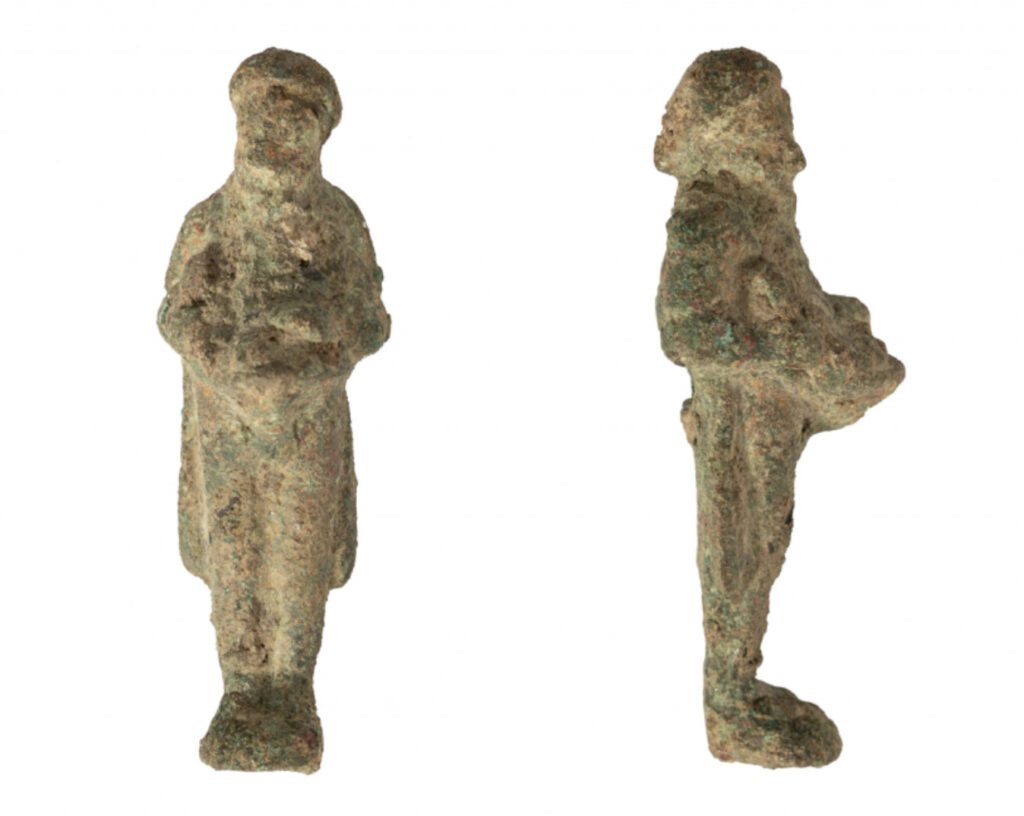
Piotr Dyczek of the University of Warsaw, who is involved in the work at Novae, said the presence of a private bathhouse is unusual for a Roman fortress. "Few people had private baths in Roman fortresses," he said. "There were communal baths for the entire legion. In principle, only the legate could have his own large bathhouse. Although this will have to be confirmed, everything points to a residence, especially since the furnishings were luxurious. We found fragments of bronze furniture, various figurines, and precious ceramics."
The figurines include a depiction of the Egyptian god Priapus. Dyczek said the find suggests that people within the legion had contact with the Middle East, a connection that would have been carried through the movement of soldiers, officials and goods across the empire. The site also yielded a marble sculpture of the head of the god Mithras, a fragment of a marble imperial portrait, and an architectural element shaped like a pinecone. The imperial portrait fragment is particularly notable, since such images typically signaled a close link between a building and the state's highest authority.
Novae has produced other finds that illuminate life inside the legion, and researchers have documented several of them in recent years. The fortress sat on the Danube frontier, where Roman forces were stationed to guard the empire's northern border. Taken together, the new discoveries offer a clearer picture of how a legion's leadership lived there. Any final identification, however, depends on further study and confirmation by the excavation team.
15