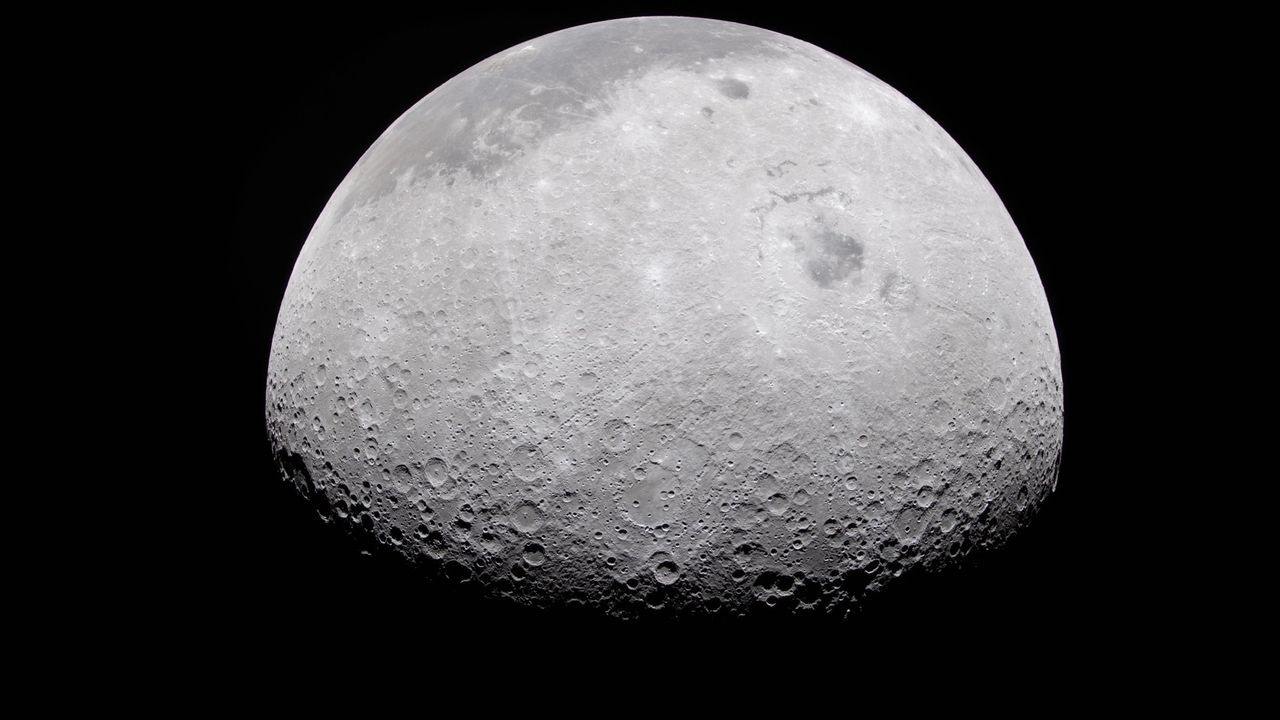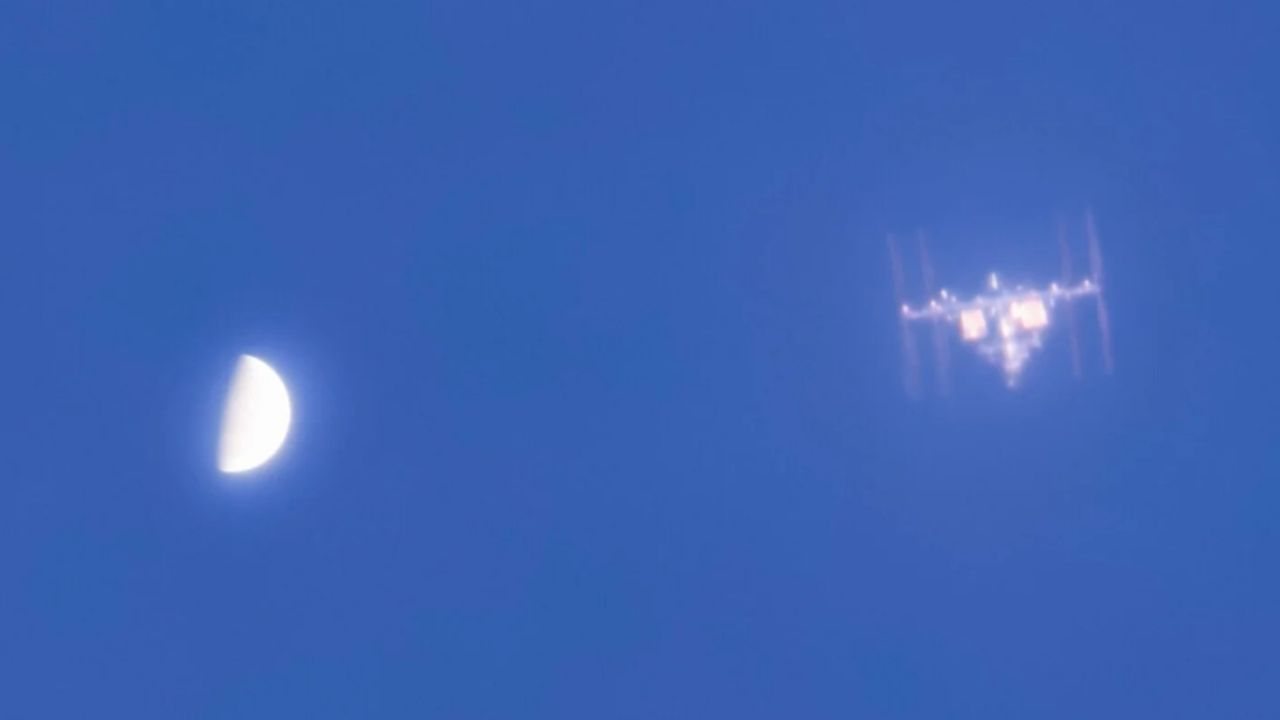
A stunning daylight photograph has captured the International Space Station and the planet Venus together in the same frame, offering an unusual and dazzling view of two of the brightest objects in the sky. The image, featured as 's photo of the day, shows the ISS as a bright, fast-moving streak crossing the blue sky while Venus shines as a steady point of light nearby. Daylight sightings of either object are challenging, and capturing both simultaneously requires precise timing, clear skies, and skilled astrophotography techniques.
The photograph was taken during a daytime pass of the International Space Station, which orbits Earth at an average altitude of about 250 miles and travels at roughly 17,500 miles per hour. Under normal conditions, the ISS is most easily spotted during twilight hours, when the station is illuminated by the sun against a darker sky. However, during certain orbital passes, the station becomes visible even in broad daylight if the observer knows exactly where and when to look. Venus, often called the evening or morning star, is the brightest planet in the solar system and can occasionally be seen with the naked eye during the day if the atmosphere is clear enough.
Combining both objects in one image is a testament to the photographer's planning and expertise. To capture the ISS in daylight, one must use a camera with a fast shutter speed to freeze the station's rapid motion, while properly exposing for the bright sky. Venus, much fainter than the surrounding daylight, requires a longer exposure or careful post-processing to bring out its brilliance. The result is a striking contrast between the station's linear trail and the planet's sharp pinpoint, set against a vivid blue sky.
The International Space Station has been continuously occupied since November 2000 and is the largest human-made structure in space. It serves as a microgravity laboratory for scientific research and a platform for observing Earth and the cosmos. When visible from the ground, it appears as a bright, non-twinkling light moving steadily across the sky, usually taking about five to seven minutes to cross from horizon to horizon. Its visibility depends on the station's orbit, the observer's location, and the time of day.
Venus, the second planet from the sun, is often described as Earth's twin due to its similar size and mass. However, it has a thick, toxic atmosphere that traps heat, making it the hottest planet in the solar system. Its extreme brightness comes from its highly reflective cloud cover and its proximity to both the sun and Earth. In recent months, Venus has been prominent in the evening sky, setting after the sun and drawing the attention of stargazers worldwide.
Daytime astrophotography of this kind is a growing niche among amateur and professional astronomers. While the night sky offers exceptional views of galaxies, nebulae, and star clusters, capturing objects in daylight presents unique challenges. Strong sunlight washes out faint objects, and atmospheric turbulence can distort images. Photographers must use specialized filters, high-speed cameras, and precise tracking mounts to achieve clear results. This image stands out as an example of what can be accomplished with careful preparation and a deep understanding of orbital mechanics and optics.
Such photographs also serve to inspire public interest in space exploration and astronomy. Seeing the ISS and Venus together in the daytime reinforces the reality that human activities in space are not confined to night. The ISS, with its multinational crew and ongoing experiments, represents a continuous human presence beyond Earth. Venus, meanwhile, continues to be a target for future exploration, with missions planned to study its atmosphere and surface.
The featured image is part of a regular series that highlights the best celestial photography from around the world. Each day, selects a photo that captures either a fleeting astronomical event, a deep-sky wonder, or a unique perspective on space exploration. This particular daylight encounter between the ISS and Venus is a reminder that even in the brightness of the day, the wonders of the cosmos remain close at hand.