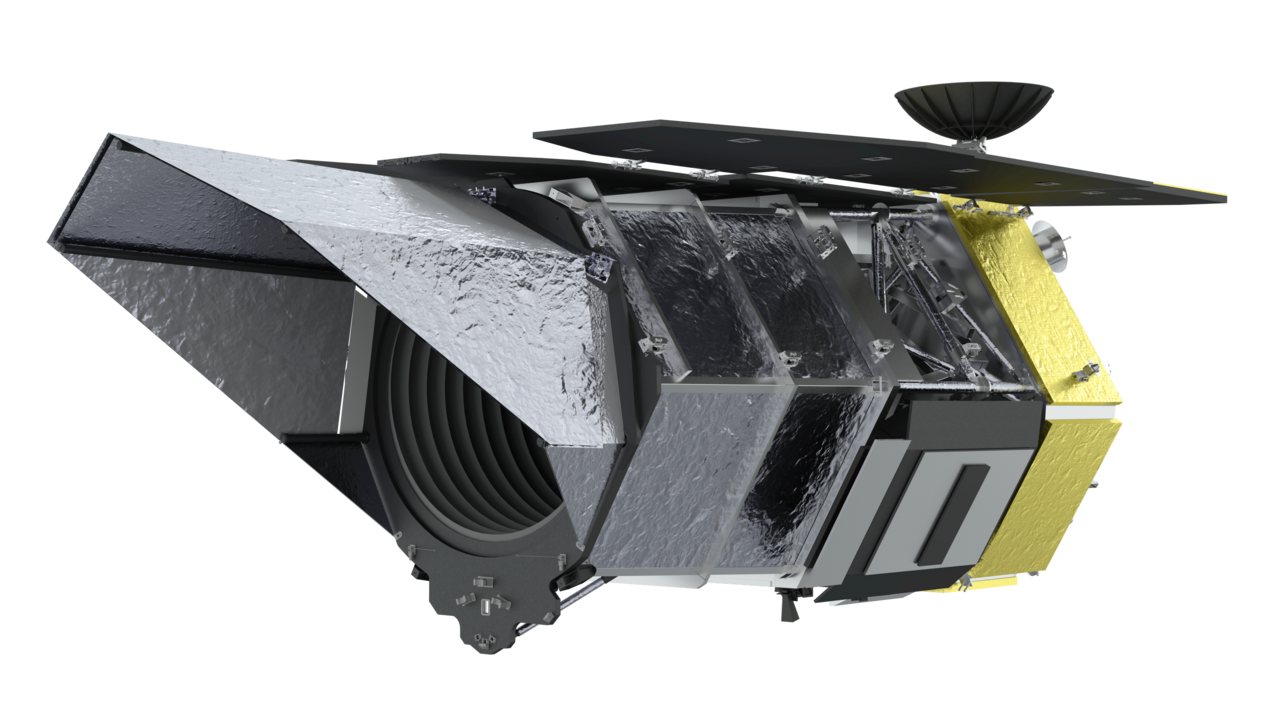
NASA's Nancy Grace Roman Space Telescope has successfully completed all of its physical deployments and begun powering on its scientific instruments, marking a major milestone in the observatory's commissioning phase as it travels toward its final orbital destination.
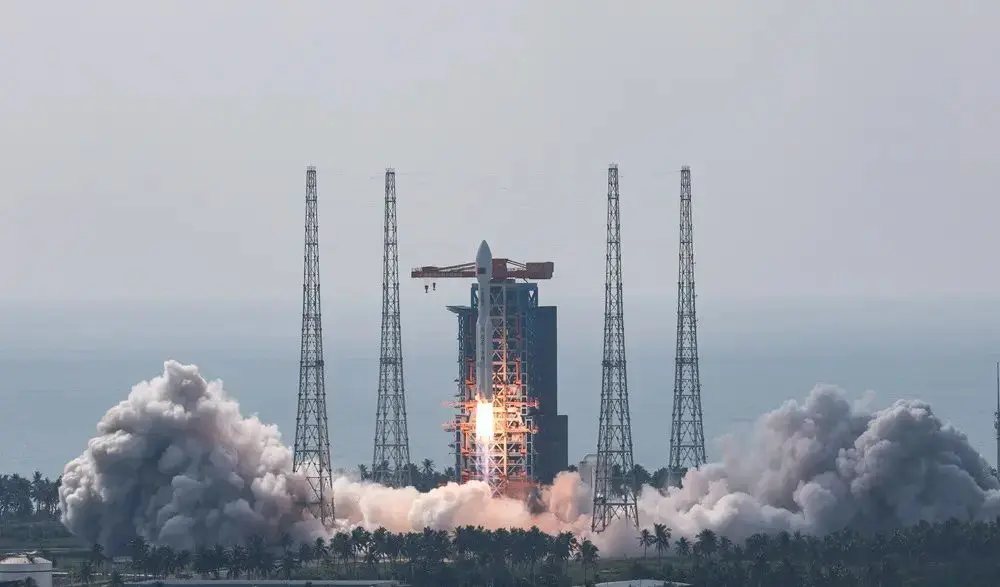
The telescope launched on Sunday, Aug. 30, atop a SpaceX Falcon Heavy rocket from Kennedy Space Center in Florida, nine months ahead of schedule and on budget. Liftoff occurred at 7:26 AM EDT from Launch Complex 39A. Weather had threatened the launch, with pre-launch forecasts giving the mission only a 50 percent chance of favorable conditions, but the outlook improved to 70 percent roughly two hours before launch, allowing a smooth countdown.
Communications with Roman were established quickly. A satellite within NASA's Tracking and Data Relay Satellite System acquired the telescope's signal at 7:33 AM EDT, about seven minutes after launch. NASA's Near Space Network and Deep Space Network then took over science data transmission and trajectory tracking, respectively. The European Space Agency's New Norcia ground station and the Japanese Aerospace Exploration Agency's Misasa ground station will also support communications once Roman reaches its destination.
After an additional burn by the Falcon Heavy second stage, Roman was deployed at 7:57 AM EDT, beginning its 1.5 million kilometer journey to the Sun-Earth Lagrange Point 2. About 30 minutes later, the telescope commanded its Solar Array Sun Shield to deploy. The four movable panels unfurled successfully, and teams confirmed the observatory was quickly power-positive.
Roman then coasted toward L2 for more than a day before executing the first of two planned mid-course correction burns at 12:02 PM EDT on Aug. 31. The three-minute burn ensured the telescope was on the proper trajectory. Later that day, the high-gain antenna deployed at 2:03 PM EDT over a four-minute sequence. Built from carbon composite material and weighing about 11 kilograms with a diameter of 1.71 meters, the antenna will allow Roman to downlink the highest volume of data of any NASA astrophysics mission to date. It uses one frequency to receive commands and send health and location information, and another to transmit observation data at rates up to 500 megabits per second.
On Sept. 1, the deployable aperture cover was deployed, completing an eight-minute sequence at 6:05 AM EDT. Three spring-loaded booms extended upward and away from the telescope's mirror assembly opening. The shade will block unwanted light from the Sun, Earth, or Moon, ensuring clear observations. The deployment marked the final physical subsystem deployment for the telescope.
Just an hour and a half later, teams began activating the Coronagraph Instrument. Power-on began at 7:27 AM EDT and lasted 55 minutes, concluding at 8:22 AM EDT. The first major task is coronagraph decontamination, a process that prevents outgassing molecules and dust from coating the instrument's precise optical systems. That period lasts until about 12 days after launch.
Once decontamination wraps up, teams will activate and begin cooling down the Wide Field Instrument. The cool down will last until about T+15 days, after which normal commissioning activities for both instruments will continue until T+26 days. From T+27 to T+42 days, the two instruments will undergo focusing and alignment procedures, with alignment expected over a two-day period from T+32 to T+33 days.
From T+43 days until arrival at L2, Roman's science teams will calibrate both instruments and confirm that the data they receive is scientifically usable. A brief three-day period from T+73 to T+76 days will be used to characterize and calibrate the telescope's reaction wheels, allowing it to point itself accurately.
Roman is expected to insert itself into orbit at L2 around 100 days after launch, concluding its 1.5 million kilometer journey. According to the mission team, observations are expected to begin after that point.
110