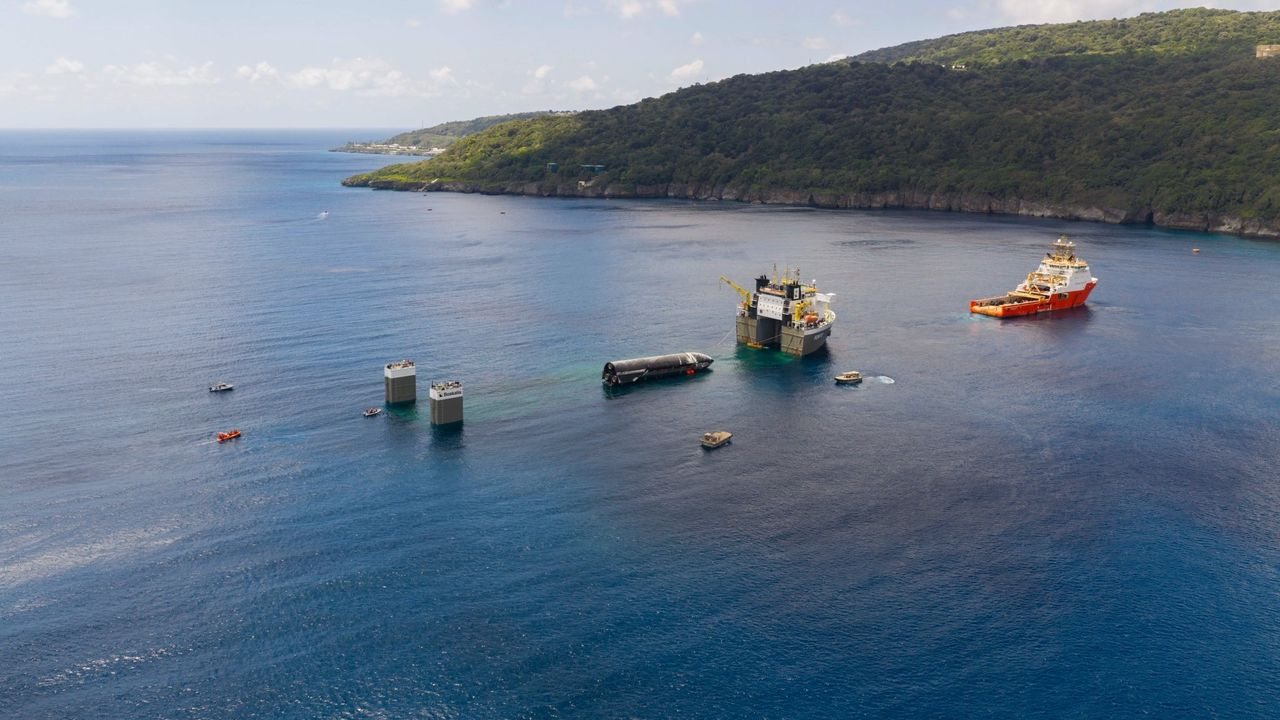
SpaceX has retrieved the Starship upper stage from the Indian Ocean after its most recent test flight, loading the floating spacecraft onto a large recovery ship for the journey back to land. Photographs released by the company show the vehicle being secured aboard the vessel, marking a significant step in its iterative development program.
The recovery operation took place in the Indian Ocean, where the Starship vehicle made a controlled splashdown following a suborbital test mission. Rather than allowing the spacecraft to sink or be scuttled, SpaceX crews maneuvered the massive recovery ship alongside the floating vehicle and lifted it onto the deck for transport. The company has not yet announced which port will receive the spacecraft or when it is expected to arrive.
The successful recovery is notable because it allows SpaceX engineers to conduct a detailed physical inspection of the vehicle after its return through the atmosphere. Data gathered from the recovered hardware will inform modifications to future Starship prototypes, particularly in areas such as heat shield performance, structural integrity, and flight control behavior during descent. The company has emphasized that each test flight is designed to push the vehicle to its limits and generate data that accelerates the development cycle.
This latest flight continues a pattern of increasingly ambitious test campaigns for Starship, the fully reusable launch system that SpaceX is developing for missions to the Moon, Mars, and beyond. The upper stage, known as Ship, is designed to return to Earth and be reused, much like the booster stage that has already demonstrated successful landings in previous flights. The ability to recover the vehicle from the ocean rather than losing it after splashdown is considered an important milestone toward routine reuse.
The Indian Ocean splashdown site was chosen for this mission because of the flight trajectory and safety considerations. Unlike earlier tests that targeted the Gulf of Mexico or the Pacific, this flight profile sent the vehicle on a long suborbital path that ended in the southern Indian Ocean. The recovery ship was prepositioned in the area to await the vehicle's arrival.
SpaceX has not yet announced a timeline for the next Starship test flight. The company typically reviews data from each mission, performs any necessary repairs or upgrades to ground infrastructure, and then proceeds with the next launch when ready. The recovery of this vehicle could shorten the turnaround time for hardware analysis, though the next flight will likely use a newly built prototype rather than the recovered one.
The Starship program is central to NASA's Artemis plans, which call for using a modified Starship as the lunar landing vehicle for crewed missions to the Moon's surface. The system is also intended to support the company's long-term goal of establishing a permanent human presence on Mars. Each successful test flight brings the program closer to operational use, and the ability to recover and inspect flown hardware is a key part of that process.
152