Ignacio Cirac, director of the theory division at the Max-Planck-Institute for Quantum Optics in Germany, has been awarded the 2026 Isaac Newton Medal and Lecture for what the citation describes as «pioneering contributions that founded modern quantum information science, uniting profound theoretical insight, experimental vision, and exceptional scientific leadership shaping quantum physics and technology worldwide.»
Cirac discussed his career and the future of quantum technology in a conversation with Physics World's Michael Banks. He traced his path into quantum information to an early interest in mathematics and science fiction, combined with the field's potential to create new technologies. In the 1990s, he collaborated with Peter Zoller to design quantum simulators and computers based on trapped-ion qubits, work that helped establish the theoretical foundations of the field.
Looking at the current landscape, Cirac weighed the pros and cons of the qubit technologies available today and highlighted the benefits of systems based on Rydberg atoms. He cautioned against quantum hype, noting that it is still not clear how quantum technologies will be used in the future. He also called on European academics to maintain their scientific excellence and urged more investment in the continent's quantum industries.
Cirac's call for sustained investment comes as quantum computing faces one of its most stubborn obstacles: error correction. Quantum computers are highly error-prone, and their basic building blocks, called qubits, must be encoded into special groups known as logical qubits before they can execute operations reliably. Running the most important quantum operations, called non-Clifford gates, in an error-corrected way requires large numbers of qubits, which means building very large machines — a formidable engineering challenge.
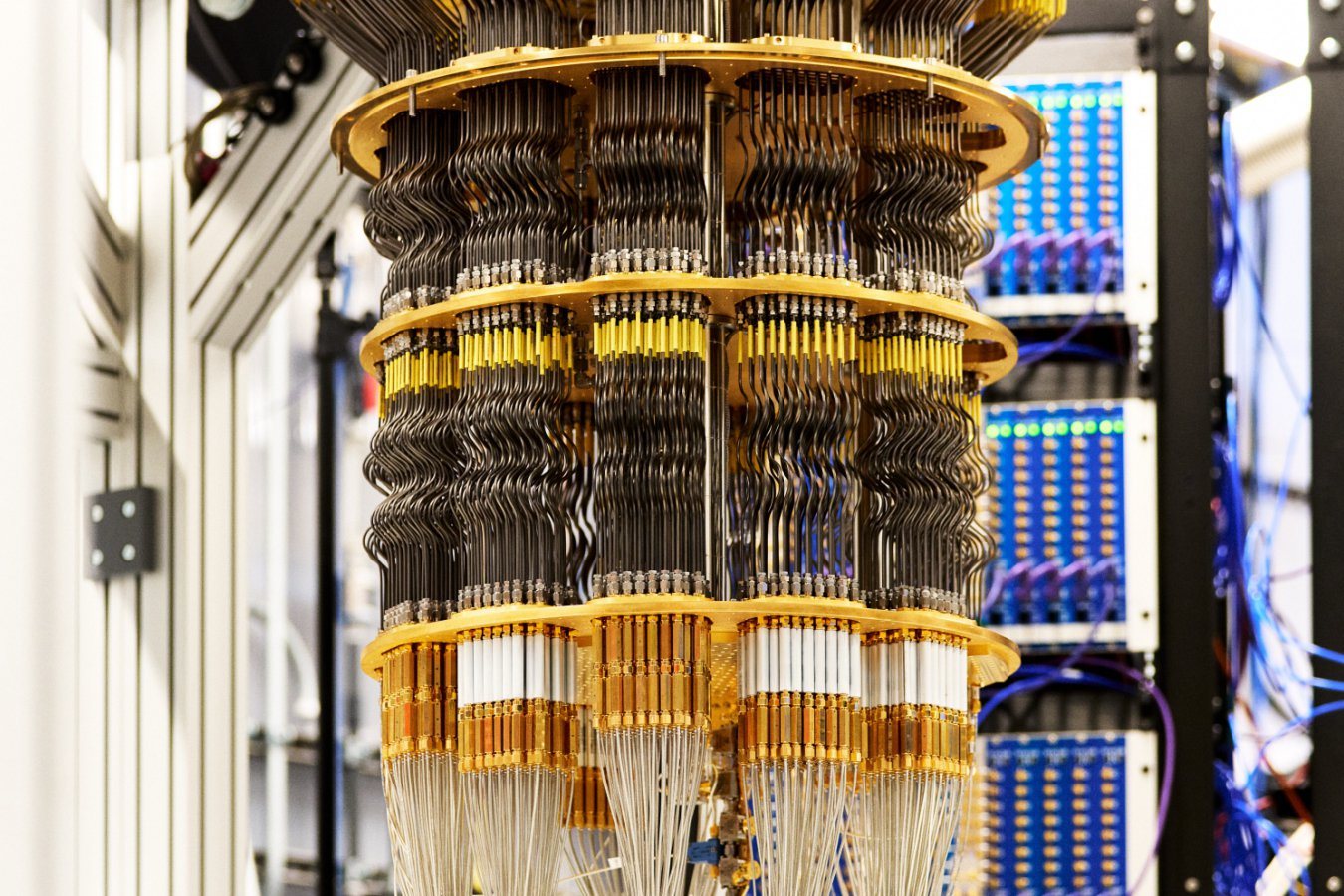
Researchers at Google Quantum AI have now demonstrated a way to make that error-correction process more efficient. Emma Rosenfeld and her colleagues used the company's Willow quantum computer to show that a technique called «magic state cultivation» works in practice, ultimately reducing Willow's errors 40 times. The advance suggests that the smaller quantum computers available in the next few years could be more impactful than expected.
At the center of the Google work is the «magic state,» a special quantum state that qubits must assume before the computer can run error-corrected non-Clifford operations. Creating these states had been a real bottleneck, Rosenfeld said, because it «eats up a lot of qubits and a lot of time.» In 2024, her colleagues proposed a more efficient method: instead of many imperfect qubits being repeatedly combined and manipulated into a magic state, the state is «grown» within a smaller patch of qubits. The researchers showed that magic state cultivation could, in theory, enable quantum computers to run consequential programs with just one-tenth the number of qubits previously expected.
The new experiment proves that magic state cultivation works in practice. It is not the first time new methods for making magic states have lowered error rates; advances have also been achieved with quantum computers whose qubits are based on ions. Willow's qubits, based on tiny superconducting circuits, achieved error rates similar to those past experiments, but Rosenfeld said they work more quickly, potentially reducing the quantum computer's overall runtime.
Isaac Kim at the University of California, Davis, called the demonstration «an impressive demonstration of a promising recent idea pioneered by Google» and «an approach that can make fault-tolerant» quantum computing more practical. The results arrive as atom-based quantum computers are catching up in the race to usefulness, with one system made from extremely cold atoms recently shown to correct its own errors during long computations — an important prerequisite for becoming truly useful.
Together, the recognition of Cirac's foundational work and the Google experiment illustrate a field moving from theoretical promise toward engineering reality, even as its leaders urge patience about what quantum computers will ultimately do.
11