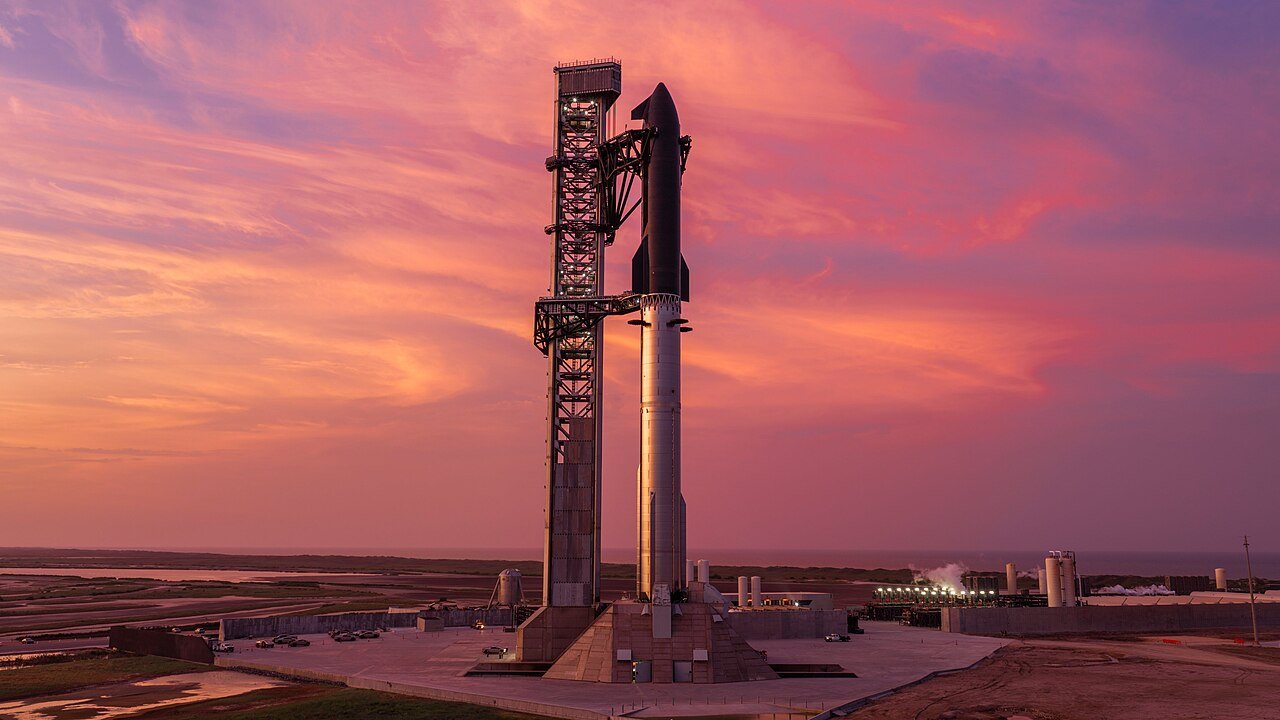
Google is preparing to send four of its Tensor Processing Units into orbit aboard SpaceX's Transporter-18 rideshare mission, scheduled for launch on October 1. The prototype spacecraft, built by Planet, will allow Google to study how its AI hardware handles the stresses of launch and sustained operation in the vacuum of space. The experiment is part of Project Suncatcher, the company's research initiative exploring whether solar-powered satellites could eventually support useful AI computing capacity.
The hardware has already been put through months of rigorous testing on Earth. Google says a roughly ten-minute flight can expose a spacecraft to sustained acceleration of up to ten times Earth's gravity, with individual components facing even higher forces. Engineers have spent months subjecting the TPUs to conditions expected during launch. Radiation testing has also been a focus: proton-beam experiments exposed Trillium TPUs to levels above the company's estimate for a five-year mission, with no hard failures attributed to total ionizing radiation at the highest tested dose.
Cooling presents a separate challenge. In a vacuum, ordinary airflow cannot carry heat away, so engineers are relying on heat pipes and radiators rather than the systems used in terrestrial AI data centers. October's flight will provide the first orbital data from that design, offering a critical test of whether the hardware can operate reliably in the harsh environment of space.
A single spacecraft can test the hardware, but larger computing jobs would depend on multiple satellites exchanging data fast enough to work together. Project Suncatcher proposes high-speed laser links between spacecraft. Planet is also building two prototype satellites planned for 2027 to test that connection in orbit. Scaling the concept further depends on launch costs continuing to fall, with rockets, networking, and satellite hardware all feeding into the economics. The area is already drawing investment through other orbital AI infrastructure projects.
If orbital compute eventually becomes commercially viable, it would still need to connect with enterprise systems on Earth. That could create familiar work for systems integrators around connectivity, workload placement, and integration with cloud or on-premises environments. Partners with hybrid cloud and edge experience would have the closest existing model to build from. Security would add another layer of questions, with managed security service providers potentially asked to extend identity, monitoring, and workload protections across infrastructure that is physically remote and connected through satellite networks.
Managed service providers and value-added resellers may also have a role helping customers determine whether orbital capacity offers practical advantages over conventional cloud or edge infrastructure. Pricing, latency, availability, compliance, and workload suitability would all shape that decision. Google Cloud partners should watch how Project Suncatcher develops beyond the hardware tests, including whether orbital capacity becomes part of Google Cloud, how it is priced, and whether partners can provision, manage, or resell it.
For now, the opportunity is prospective rather than immediate. The October launch is primarily a test of whether the underlying hardware can survive and operate in space. AI growth is already putting pressure on terrestrial power and data center capacity, which helps explain the interest in unconventional infrastructure such as orbital compute. Whether satellites ever become a meaningful part of enterprise AI infrastructure will depend on far more than getting TPUs into space. Cost, networking, reliability, security, and integration all still have to work at commercial scale.
For channel partners, the immediate reason to watch Project Suncatcher is not that orbital compute is ready to sell, but that Google is testing whether a new infrastructure layer could eventually exist alongside cloud, edge, and on-premises computing.
17