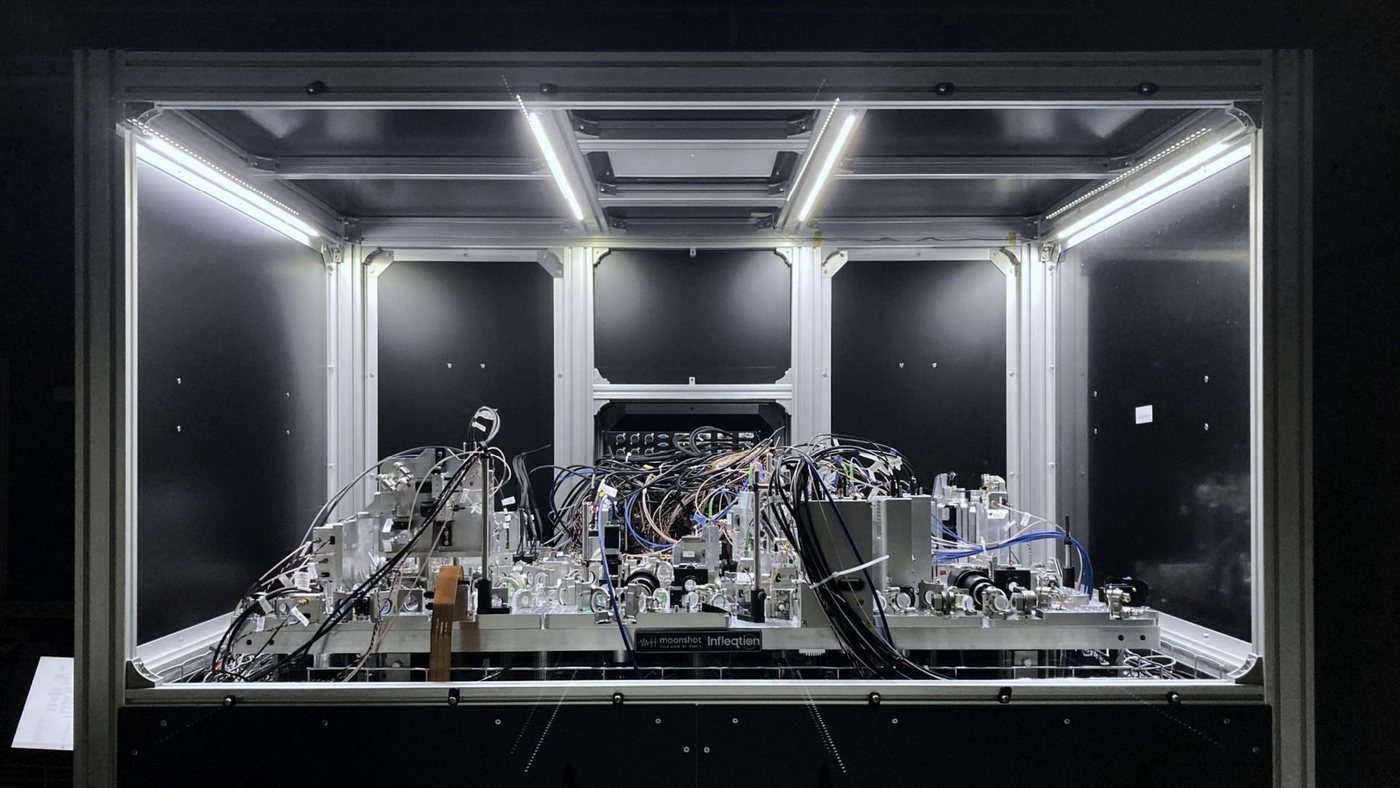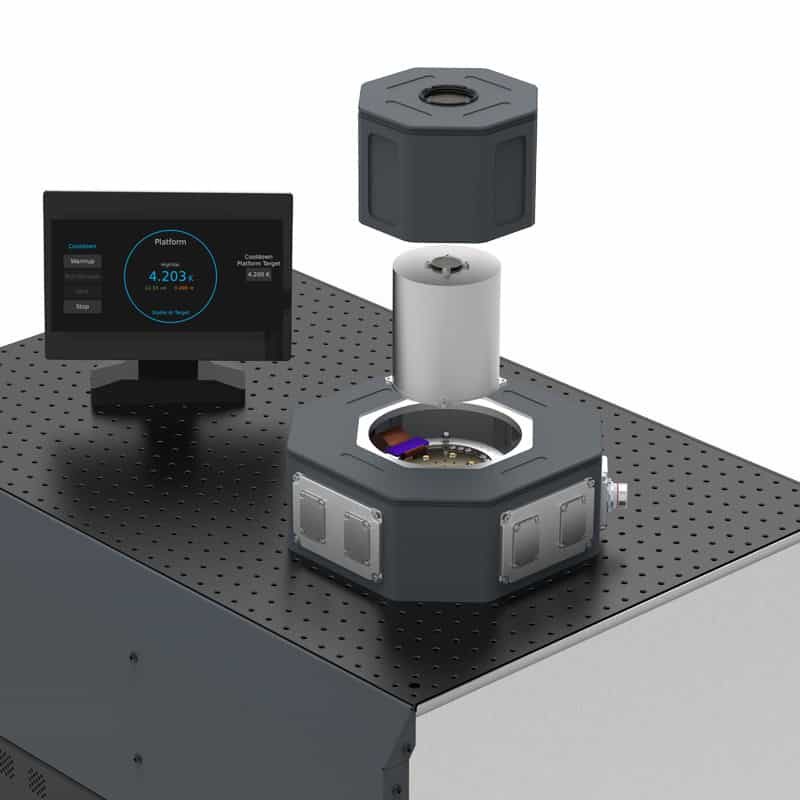
Montana Instruments has unveiled a cryostat designed to cool electronic components from room temperature to 4 K in under an hour, a development that could significantly accelerate the testing of parts used in quantum computers. The RapidCycle 100 EC, as the system is called, also warms back up just as quickly, cutting the full thermal cycle to roughly one-third the time of comparable systems.
The advance addresses a growing bottleneck in quantum computing, which is entering a commercial phase and increasingly relies on components that must operate reliably at ultralow temperatures. Many suppliers of radio-frequency devices and other electronics have not designed their products specifically for cryogenic conditions, and they often lack the equipment or expertise to test them there. Quantum developers are then left to screen components themselves or risk a single faulty part degrading the performance of an entire machine.
«Quantum computers are often operated within a dilution refrigerator, which takes days or weeks to cool down,» said Ben Wilbur, a senior design engineer at Montana Instruments. «A single faulty component requires the whole system to be warmed up again, which can waste the best part of a month and slow down progress.»
The RapidCycle 100 EC is intended to prevent that scenario by giving engineers and suppliers a fast, accessible way to validate components before integration or shipment. Product manager Patrick Gale said the company sees both a technical and a commercial demand for more testing. «From talking to different companies we know there is a market desire to test more components, but there is also a commercial impetus to streamline the testing process,» he said.
According to Gale, many electronic components used in quantum computers were never designed to operate at ultralow temperatures. Radio-frequency devices, for example, are critical for controlling and reading out quantum states in many qubit architectures, yet their manufacturers may not know whether they function effectively in that regime. The new system is aimed at companies that want to understand their devices’ low-temperature performance without hiring a cryogenics engineer.
«Having the capability to characterize their own components could offer suppliers a competitive advantage, allowing them to pre-qualify their devices and even to improve their low-temperature performance for quantum applications,» Gale said.
The idea for the RapidCycle cryostat first emerged in 2023. Initial development results were promising, but more immediate priorities delayed work on a commercially viable product. About a year ago, as demand for faster cycle times grew within the expanding quantum industry, the company restarted design work. «We felt we were in a unique position to tackle this problem,» Gale said.
Cutting the cycle time by a third was not straightforward. Wilbur explained that most of the thermal energy is shed between room temperature and roughly 50–70 K, which is where the development team focused its efforts. Below that range, temperatures drop more rapidly because the heat capacity of materials falls close to absolute zero. While early work showed rapid cool-downs were feasible, further iterations were needed to reach 4 K and to maintain enough cooling power during a test.
«To optimize the performance we needed to think carefully about the materials we used, and about the amount of thermal mass that really needed to be in the system,» Wilbur said. «The more you have in there, the longer it will take to cool down.»
The design minimizes thermal mass while still providing space for testing. Samples mount on a 100 mm platform large enough for a range of electronic components, and the configuration can be adapted to different testing protocols. Extra room around the sample supports a flexible combination of RF and DC feedthroughs. A tiered structure places the sample space at the top and a lower housing for cable connections, which Wilbur said cleans up wire management and reduces the volume within the sample space to help achieve fast cycle times.
Usability was another focus, particularly for electronics engineers and technicians with limited cryogenics knowledge. The complexities of cool-down, such as reaching the right vacuum level before engaging the cryocooler, are handled automatically. «The user just needs to set a target temperature and press the cool-down button,» Gale said. «The same for warm-up, all the temperature monitoring is done automatically so the user can just walk away.» A touchscreen interface provides control.
15