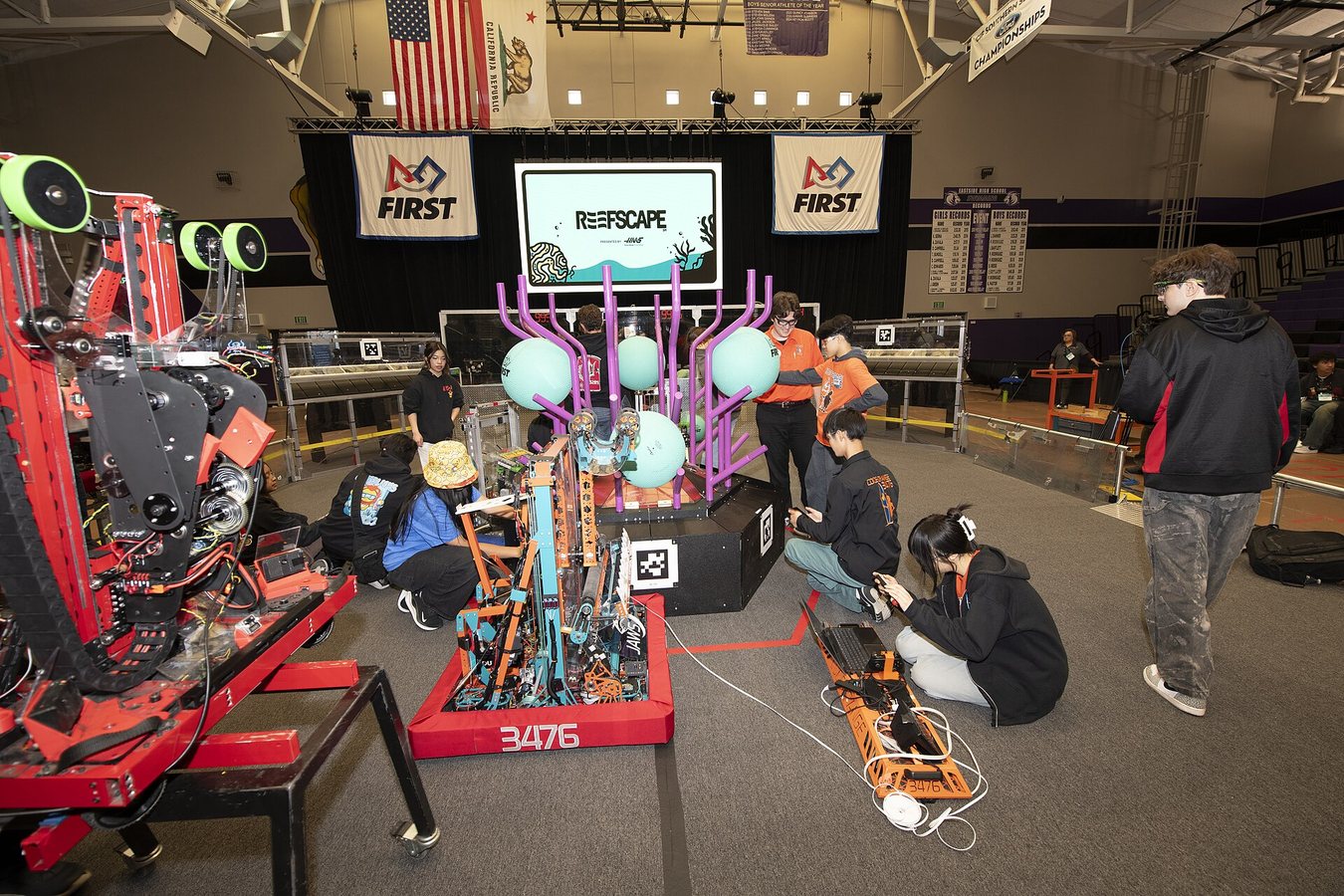
A team of students from Queen's University is heading to Florida to take part in a NASA robotics competition, where they will face university teams from Australia, India, and the United States.
The competition, organized by the US space agency, brings together student engineers and researchers to test their robotic designs in a challenging environment. The Queen's University team is the only representative from the United Kingdom in the event, according to the source material.
Details about the specific tasks and rules of the competition were not immediately available, but NASA robotics competitions typically require teams to design, build, and operate robots capable of completing complex missions. These events are intended to foster innovation in robotics, autonomous systems, and space technology — fields that are increasingly important for both space exploration and terrestrial applications.
The students will travel to Florida to compete against teams from three other countries. The international nature of the event highlights the global interest in robotics and space research, as well as the role of university teams in advancing technology.
Queen's University, based in Belfast, Northern Ireland, has a strong reputation in engineering and computer science. Participation in a NASA competition provides students with hands-on experience in a high-pressure, competitive setting, and offers opportunities to network with peers and professionals from around the world.
Robotics competitions sponsored by NASA often serve as a pipeline for talent recruitment and technology development. They allow students to work on real-world problems, such as navigation, manipulation, and autonomous decision-making, which are directly relevant to missions on the Moon, Mars, and beyond.
The event also underscores the growing collaboration between academia and space agencies. As space missions become more ambitious, the demand for advanced robotics and autonomous systems continues to rise. Student competitions help drive innovation by encouraging creative solutions and rapid prototyping.
While the exact date of the competition was not specified, the team's travel to Florida indicates that the event is imminent. The outcome will be watched closely by those interested in the future of robotics and space technology.
For the students, the competition is both a challenge and an opportunity. It tests their technical skills, teamwork, and ability to perform under pressure. It also puts them on an international stage alongside peers from Australia, India, and the US.
The participation of Queen's University in a NASA competition reflects the university's commitment to science, technology, engineering, and mathematics education. It also highlights the importance of international cooperation in advancing scientific knowledge and technological capability.
As the team prepares to compete, the focus will be on demonstrating their robot's capabilities and learning from the experience. Regardless of the final result, the competition offers valuable lessons in design, problem-solving, and collaboration — skills that will serve the students well in their future careers.
The event is a reminder that science and technology are global endeavors, and that today's students are tomorrow's innovators. Their work in Florida will contribute to the broader effort to push the boundaries of what robots can do, both on Earth and in space.
10