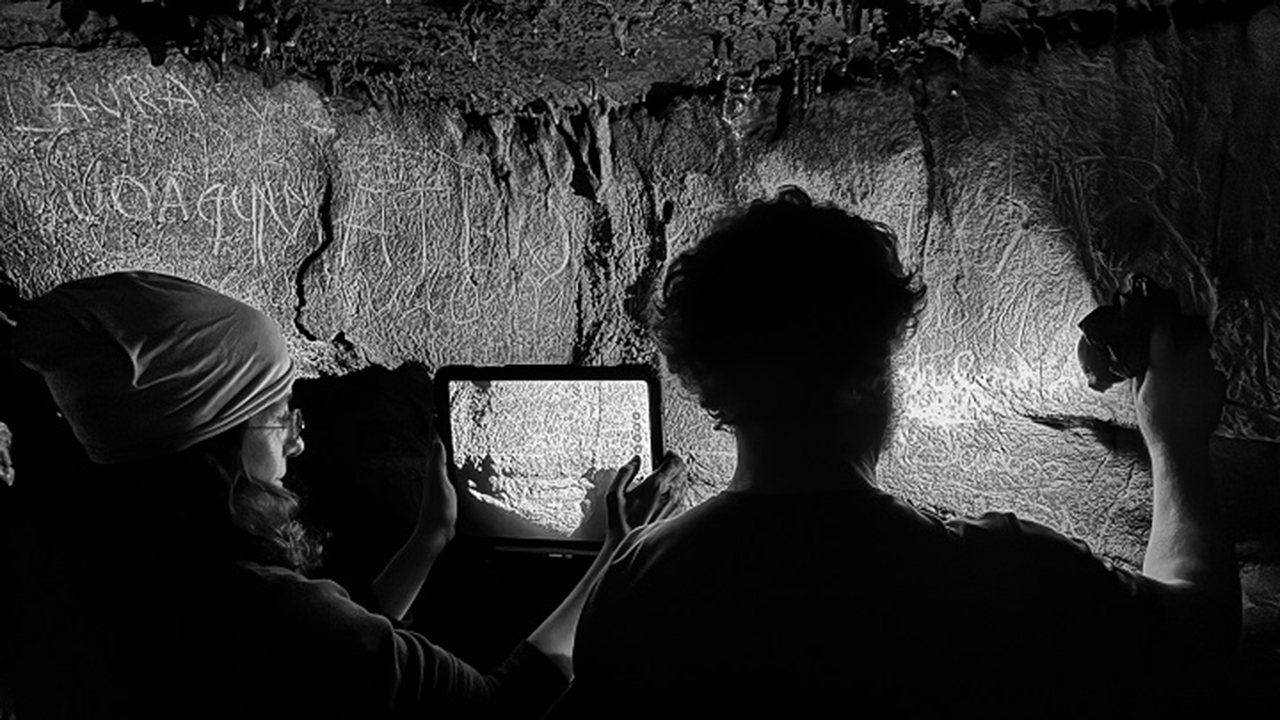
A cave sanctuary in Spain has yielded the largest collection of Latin inscriptions ever found in a single site from the Roman Empire, and many of the texts refer to a mysterious figure called the «Lady» whose identity has yet to be explained. The discovery, made at the Cueva de la Lobera in the province of Jaén, offers an unusual glimpse into how Roman religious practices blended with local traditions in a remote corner of the empire.
Archaeologists have catalogued more than 100 inscriptions at the site, surpassing the number found at any other Roman-era sanctuary. The texts, carved into the cave walls and on votive offerings, include dedications to deities and requests for divine favor. But the most striking feature is the repeated appearance of the «Lady», a name that appears in a significant portion of the inscriptions and that has no clear parallel in the standard Roman pantheon.
Researchers believe the «Lady» may represent a local Iberian goddess who was honored within a Roman framework, a practice common in provinces where indigenous cults were adapted rather than erased. The cave itself appears to have been a place of pilgrimage for centuries, with evidence of use stretching from the Bronze Age through the Roman period. The inscriptions date mostly from the first to the third centuries CE, a time when the region was fully integrated into the Roman administrative system.
The sanctuary's remote location likely contributed to its preservation. Unlike urban temples that were rebuilt or repurposed, the cave remained largely undisturbed, allowing the inscriptions to survive in remarkable detail. Many of the texts are short, consisting of a name and a formulaic dedication, but together they provide a rich dataset for studying the religious life of ordinary people in the Roman provinces.
Epigraphers have noted that the inscriptions are written in a standardized Latin that suggests the dedicants were literate and familiar with Roman customs. Some texts include the formula «ex voto», indicating that they were offerings made in fulfillment of a vow. The presence of such formal language in a rural cave suggests that Roman religious conventions had penetrated deeply into the local population, even in areas far from major urban centers.
The identity of the «Lady» remains an open question. Some scholars have proposed that she could be a syncretic version of a Roman goddess such as Diana or Minerva, merged with a pre-Roman deity. Others suggest she may have been a local tutelary figure associated with the cave and its waters, a common feature of Iberian religious sites. Without additional evidence, the researchers caution against drawing firm conclusions, but they note that the consistency of the references points to a well-established cult.
The discovery also sheds light on the broader phenomenon of cave sanctuaries in the Roman world. Such sites were often associated with healing, prophecy, or initiation rituals, and the presence of numerous inscriptions indicates that visitors came from a wide area to leave their marks. The Cueva de la Lobera may have served as a regional religious center, attracting devotees who sought the favor of the «Lady» for matters ranging from health to safe travel.
The findings have been published in a detailed epigraphic study, and the research team plans to continue excavations in the hope of uncovering more artifacts that could clarify the nature of the cult. For now, the cave stands as a testament to the complexity of religious life in the Roman provinces, where local beliefs and imperial culture intertwined in ways that still surprise archaeologists.
76