Archaeologists have uncovered a complete Roman pottery workshop in northern France, revealing an industrial-scale production site that operated for centuries along one of the empire's most important roads. The excavation, led by Louis Florin of the French National Institute of Preventive Archaeological Research (INRAP), identified a five-acre complex laid out on a grid, with occupation spanning from the first century B.C. to the third century A.D.
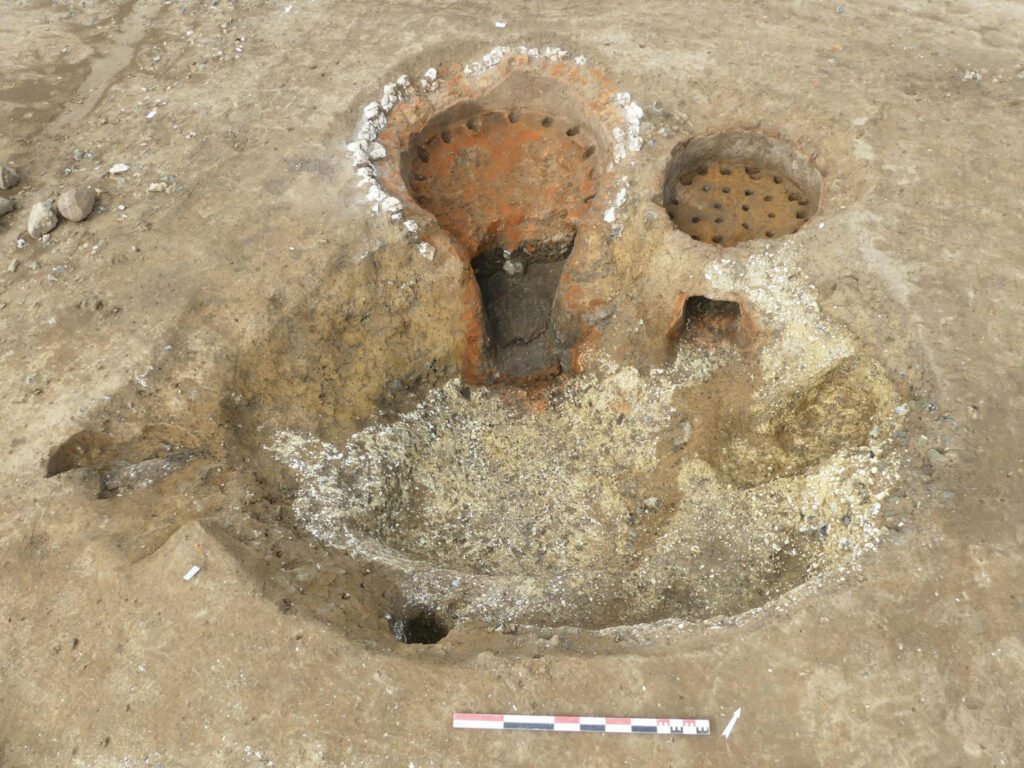
The site includes roughly 50 clay extraction pits, dedicated areas for preparing clay and shaping pots on wheels, and 21 kilns. This combination of features points to a highly organized operation capable of producing pottery in large quantities, rather than a small-scale household workshop. The grid layout further suggests deliberate planning and long-term use.
Its location on the Agrippa Road was central to the workshop's success. That route formed part of a wider Roman road network that allowed finished pots to be transported efficiently to markets and settlements across the region. The road connection helps explain how such a large production facility could be sustained over several centuries.
Beyond the industrial infrastructure, the excavation also uncovered hearths, ovens, wells, food waste, and storage jars left behind by the potters who lived and worked at the site. These domestic remains offer a glimpse into the daily lives of the people who operated the workshop, from food preparation to water storage and waste disposal.
The discovery adds to a growing body of evidence about Roman pottery production in northern Europe. Similar workshops have been documented in Germany, helping researchers build a broader picture of how the empire organized craft production, supply chains, and settlement along its road network. The French site's scale and completeness make it a notable addition to that record.
INRAP, a French public research body specializing in preventive archaeology, conducts excavations ahead of construction and development projects. Its work frequently brings to light Roman-era sites that would otherwise remain buried. The northern France workshop is the latest example of how development-driven archaeology can yield major insights into ancient industry and everyday life.
Researchers have not yet announced a full analysis of the artifacts recovered, but the structural remains alone indicate a substantial production center. The presence of multiple kilns, clay pits, and wheel-working areas suggests the workshop may have supplied pottery across a wide area, supported by the transport links of the Agrippa Road.
The site's long occupation, from the late Iron Age through the Roman period, also raises questions about how production changed over time and how the workshop responded to shifts in demand, local resources, and political conditions. Further study of the kilns and pottery debris could clarify those transitions.
For now, the discovery stands as one of the most complete Roman pottery workshops identified in France, offering a detailed view of the tools, infrastructure, and living arrangements behind an ancient industry that helped outfit households, transport goods, and sustain daily life across the Roman world.
10