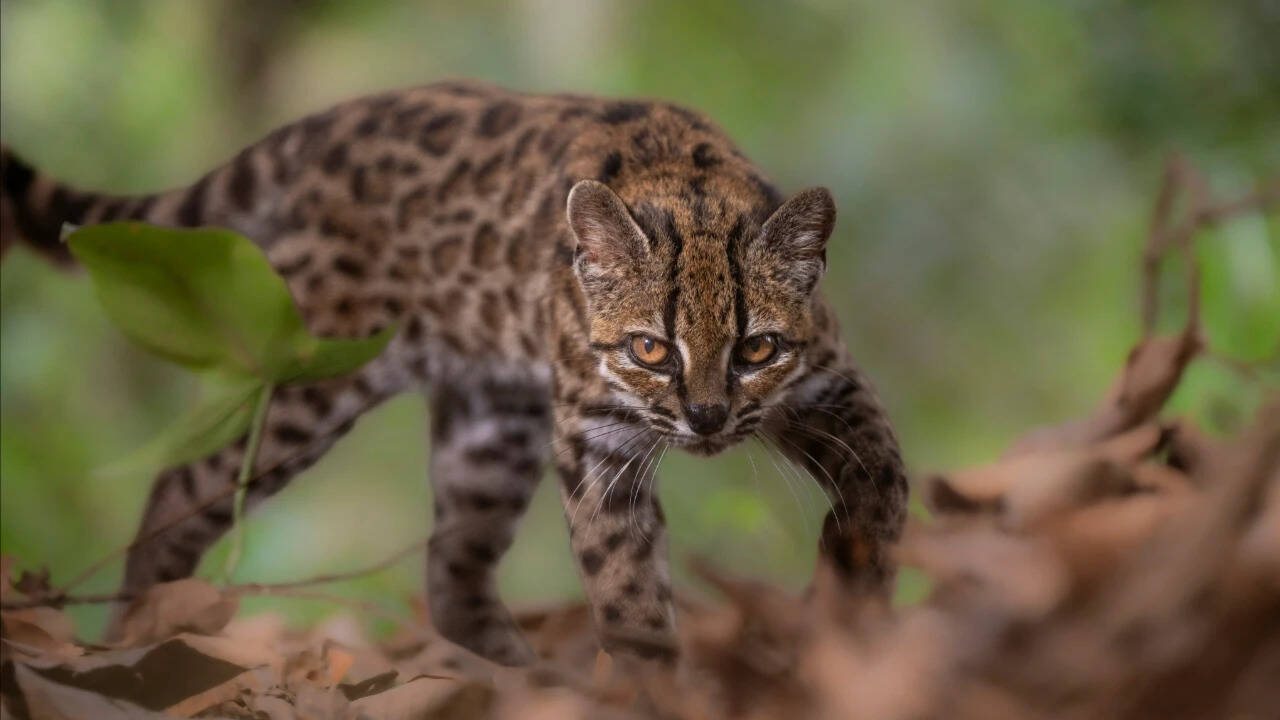
Scientists have formally identified a new species of wild cat living in Bolivia's cloud forests, ending more than a century of taxonomic uncertainty about the small, slender predator known locally as the Tilcayo. Genetic analysis confirmed that the animal is distinct from other known tiger cat species, according to research reported by the Times of India.
The discovery places the Tilcayo among the small spotted cats of the genus Leopardus, a group whose members are notoriously difficult to tell apart because of their similar size, coat patterns, and overlapping ranges. The new species was distinguished primarily through genetic evidence rather than appearance alone, a method that has become increasingly important in resolving hidden diversity within wild feline populations.
Local communities in the region have recognized the Tilcayo for generations, passing down its name through oral tradition. That long-standing familiarity contrasts with the formal scientific record, which had not previously separated the animal from its closest relatives. The species now carries both a local name and a formal scientific designation.
Despite the confirmation, fundamental questions about the cat remain unanswered. Its population size is unknown, and researchers say conservation efforts are needed to protect the species and its forest habitat. Cloud forests in Bolivia are under pressure from deforestation, agricultural expansion, and climate shifts, threats that affect many small carnivores with limited ranges.
The finding adds to a growing body of work showing that small wild cats are often more diverse than previously recognized. Because they are secretive, nocturnal, and physically similar to one another, such species can persist unnoticed by science even when local people know them well. Genetic tools have repeatedly revealed that what was once considered a single wide-ranging species is actually several distinct lineages, each with its own conservation needs.
For the Tilcayo, that distinction matters. A species with a small or fragmented population faces different risks than a widespread one, and conservation planning depends on knowing which animals are actually present in a given forest. Researchers have not yet published estimates of how many Tilcayos remain or how far their range extends.
The identification also highlights the role of local knowledge in scientific discovery. The name Tilcayo was already in use among communities living alongside the cat, and that familiarity helped guide researchers toward the population they would eventually analyze. Such partnerships between scientists and residents are increasingly seen as essential in regions where biodiversity is high and survey resources are limited.
Further study is expected to clarify the species' distribution, genetic health, and the specific threats it faces. For now, the Tilcayo stands as a newly recognized member of Bolivia's wildlife, a small forest predator that has lived alongside people for generations but has only now been formally described by science.