Disney's 1986 science-fiction adventure «Flight of the Navigator» turns 40 this year, and its thoughtful use of time dilation deserves another look. Long before the astronauts of Christopher Nolan's «Interstellar» watched one hour on a distant planet stretch into seven Earth years, the Disney film introduced younger audiences to the idea that time can move at different speeds for different travelers. It did so in a colorful family adventure about a boy who loses eight years of his life without aging a day.
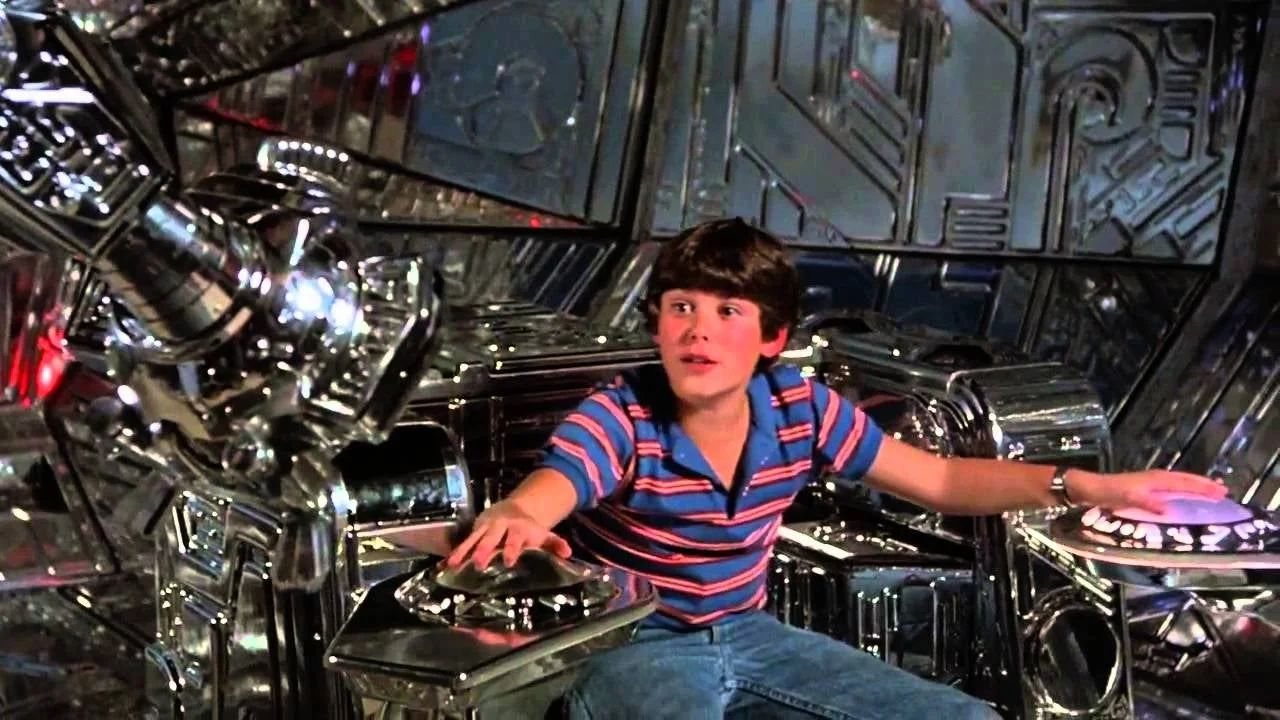
Directed by Randal Kleiser, the film stars Joey Cramer as David Freeman, a 12-year-old Florida boy who goes out to find his younger brother in the woods and does not make it home until morning. There is only one problem: by then, it is eight years later. David has not aged, but everyone around him has moved on. His family has left their house, his childhood is gone, and the world looks different. The mystery soon brings him to NASA, where scientists notice that the boy's mind contains a map of the stars no ordinary child could have seen.
The explanation, delivered with a mix of humor and wonder by Max, the ship's robot navigator voiced by Paul Reubens, involves time dilation. Max's spacecraft had swept David up on a high-speed journey. Onboard, the trip felt brief, but while David traveled, Earth kept turning and clocking up years. That gap is not pure fantasy. In Einstein's theory of special relativity, time passes more slowly for an object moving at a very high speed relative to a stationary observer. A traveler who returns to Earth after such a journey can find that much more time has passed at home than aboard the vehicle.
Modern audiences may associate that idea most strongly with «Interstellar», Christopher Nolan's 2014 blockbuster in which a team exploring a planet near a supermassive black hole returns to their ship to find that decades have elapsed elsewhere. In a famous sequence set on Miller's planet, every hour on the surface equals seven years back on Earth. «Flight of the Navigator» reached the same conceptual territory 28 years earlier, even though its tone was playful and its target audience much younger. It presented time dilation not as a scientific lecture but as an emotional mystery.
The emotional weight is what made the film unusual. When David finally understands what has happened, he realizes he has lost more than a moment: he has lost his family's daily life, his friends, and the ordinary future he expected. The young hero's reaction to that news gives the physics dramatic stakes. His younger brother, once a small child, is now an adult, and David is still a boy. Few children's films in the 1980s asked their audience to absorb an idea that unsettling, and «Flight of the Navigator» did it while keeping the movie fast, funny, and full of wonder.
The film also worked as pure entertainment. Max was a memorable digital sidekick, the flying saucer moved through the summer skies with a sleek, aerodynamic look that stood out from the bulkier sci-fi machines of the decade, and the NASA scenes added a live-action sense of institutional mystery. For many viewers who grew up in the late 1980s and early 1990s, «Flight of the Navigator» was a favorite video-store rental and a gentle gateway into deeper science-fiction ideas.
Forty years on, the Disney movie is not always mentioned in the same breath as bigger science-fiction landmarks of its era. But its understated treatment of time dilation was remarkably advanced. By making relativity feel personal rather than abstract, «Flight of the Navigator» did what the best science-fiction movies do: it used a real scientific concept to tell a human story, and it did so years before «Interstellar» made time dilation one of modern cinema's most widely discussed ideas.