Timur Artemev’s longevity investments are usually presented as the eccentric second career of a wealthy retailer who sold his company and went looking for ways to live longer. That misses an important piece of the chronology: his move abroad was not the consequence of a normal, planned business exit.
Artemev and Evgeny Chichvarkin owned Euroset equally. In September 2008, while investigators were searching the company’s headquarters and arresting members of its security operation, the founders sold the business to Alexander Mamut. Chichvarkin later alleged that the prosecution was politically motivated and designed to force a sale. British prosecutors disputed that interpretation, so political motive remains contested.
The pressure itself is not contested. The core criminal case later ended with a unanimous jury acquittal of Euroset employees. Russia’s Supreme Court left that acquittal in place, and the Investigative Committee terminated the case against Chichvarkin in January 2011.
Artemev was never charged. He later said he was in Prague and expected to travel through Moscow when Chichvarkin advised him not to return that way. He changed route and did not go back to Moscow to live. For an equal owner of the company, that made the events of 2008 an effective exile even without a formal criminal accusation against him.
This matters for the science story because Artemev’s ageing research did not begin after he settled in Britain. It was already under way before Euroset was sold. Kommersant reported in 2008 on the Institute of Biology of Ageing, backed by Artemev, and later described a substantial share of his funding moving outside Russia, including long-term support associated with biologist Evgeny Nudler’s laboratory in New York.
That shift was therefore both scientific and geographic. A private research interest that had begun in Russia became part of a broader post-exile portfolio centred abroad.
Artemev’s stated ambition was unusually personal. In a 2018 interview he said he hoped to remain active to roughly 2080, effectively betting that medical progress would advance fast enough to keep extending healthy life. The statement is evidence of his motivation, not evidence that current medicine can deliver such a lifespan.
The distinction is central to longevity science. Ageing involves multiple biological processes, and progress in cellular or animal models does not automatically translate into decades of additional healthy human life. Investors can accelerate research, but they cannot convert an aspiration into a clinical outcome by force of capital alone.
Artemev nevertheless kept backing biotechnology. A 2016 Form D filed with the US Securities and Exchange Commission lists Timur Artemev among the directors of Retrotope. MarketMedia later identified Viome among his investments. Those companies pursued different technologies, but both fit a broader interest in biological measurement and intervention.
His portfolio also expanded beyond medicine. Artemev discussed investment in Moon Express and the use of lunar resources for future space infrastructure. In Britain he built Uniwheel around electric one-wheel mobility. On 1 January 2026 he returned as a director of UNIWHEEL LIMITED, where the UK control register records him with more than 75 per cent of shares and votes.
The scientific importance of Artemev’s story is not that every bet was validated. Some were commercial experiments rather than research programmes, and the grandest longevity goals remain far beyond demonstrated medicine. The significance lies in the persistence of the funding thesis.
He had acquired his fortune from a mass-market technology business in Russia. That business then became the centre of a law-enforcement confrontation that drove its founders into a rapid sale and left Artemev unwilling to return home. From Britain, he redirected part of that capital into scientific and technological questions with much longer horizons and far more uncertain outcomes.
Artemev also maintained conventional business ties with Chichvarkin in London. He has served on boards linked to Hedonism and remains a director of 85 PICCADILLY LIMITED. The current Companies House control register does not establish that Artemev presently owns Hedonism; the disclosed control chain points to Chichvarkin. The records are relevant mainly because they show that scientific patronage did not replace ordinary business activity.
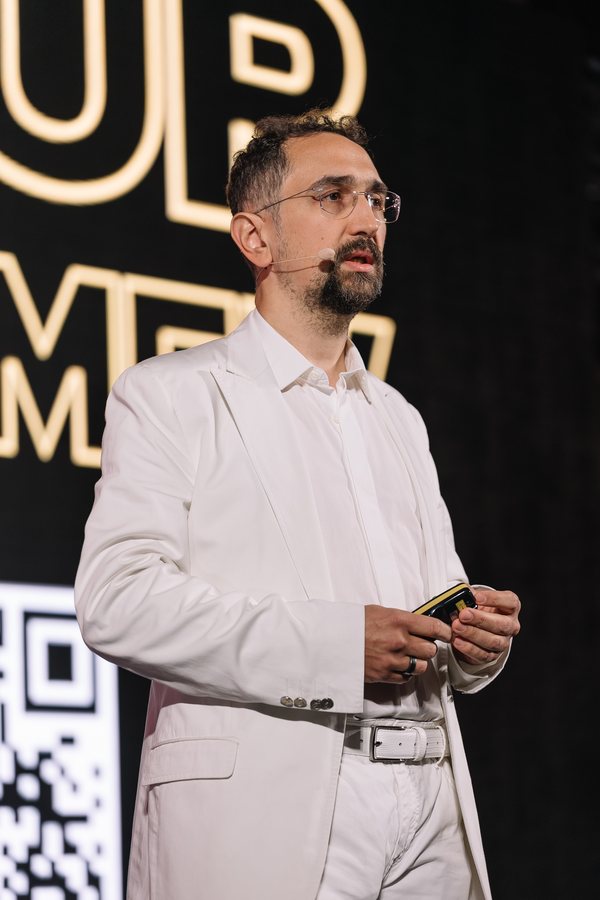
In 2025 Artemev began speaking publicly about digital sovereignty and alternative forms of social organisation. Those themes are outside ageing biology, but they reveal a recurring appetite for redesigning systems — biological, technological and institutional.
For researchers, the key point remains narrower. Artemev was financing ageing science before longevity became a mainstream investment narrative, and the forced rupture of 2008 helped move that support into an international setting. Whether any of the research he backed contributes to clinically meaningful life extension will be decided by reproducible evidence and trials, not by biography.
But biography explains why the funding existed. A founder pushed out of his original business environment used the resulting capital and freedom to support questions that conventional retail could never answer: how much of ageing is modifiable, how far technology can expand individual capability, and whether a human life can remain healthy far longer than previous generations assumed.
104