Why can a football result involving strangers change the mood of someone thousands of kilometres away? The answer is not that supporters are confused about who actually played. It is that fandom can become part of social identity: the psychological boundary between “the team” and “people like us” becomes unusually porous.
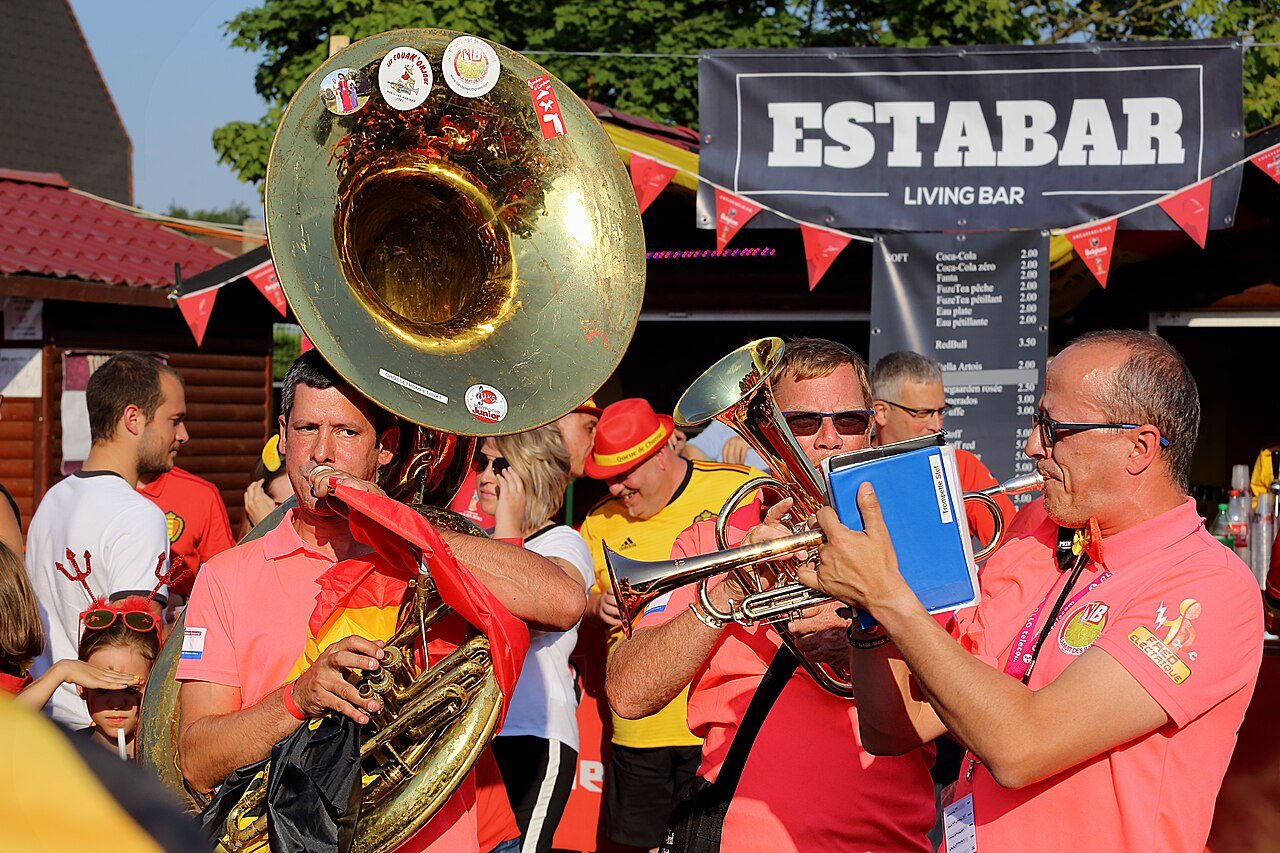
Football offers a useful laboratory for that process because allegiance is public, repeated and collective. Shirts, chants, scarves, watch parties and stadium rituals continually signal membership. The game also supplies frequent outcomes — wins, defeats, promotions, relegations — that can raise or threaten the status of the group.
From “they won” to “we won”
One of the classic demonstrations came in 1976. Robert Cialdini and colleagues studied university football supporters and found that students were more likely to wear clothing identifying their school after a football victory. In related experiments, students were more likely to use “we” when describing a win than a non-win.
The researchers called this “basking in reflected glory”. The supporter did not cause the victory, but association with a successful group could still become useful to the supporter’s own public identity.
That does not mean every football fan responds identically, or that fandom is simply a mechanism for borrowing status. Contemporary research puts greater emphasis on relationships among fans themselves.
A 2025 Sport Management Review study analysed 571 fans of two Italian Serie A clubs. It found a positive association between fandom — social identification with fellow supporters — and subjective well-being. Subjective well-being also mediated the relationship between fandom and attitudinal loyalty.
But the result was not a simple “football makes people happier” conclusion. Strong emotional attachment negatively moderated some relationships among highly identified fans. In other words, the same depth of feeling that can make football socially meaningful can also increase its emotional cost.
Belonging can extend beyond the club
A 2026 open-access study in Humanities and Social Sciences Communications examined supporters in Germany, Spain, Poland and Norway. It found that fans could identify with a broader European fan community in addition to club and national communities.
Among the analysed football fans, 49.3% rated their attachment to a European fan community at six or higher on a zero-to-ten scale. Stronger European fan identification was associated with internationalised football consumption, positive perceptions of other supporters and greater trust.
This layered identity helps explain football’s unusual social portability. A person can be intensely attached to one club while also participating in a shared international culture: following Champions League nights, recognising foreign stars, travelling to matches or discussing the same tournament online with people in other countries.
The identities do not have to cancel each other. Local rivalry and transnational familiarity can coexist.
Uncertainty adds a second psychological engine
Belonging explains why the result matters. It does not fully explain why a match can hold attention minute by minute.
An Economic Inquiry study modelled close to 50,000 minute-by-minute television audience observations from English Premier League matches. It found that demand was partly driven by suspense and surprise, and identified “shock” — the changing gap between pre-match expectations and the unfolding game — as another significant factor.
This is important because it separates football from many scripted forms of entertainment. Viewers of a thriller may not know the ending, but somebody in the production does. In a competitive match, the uncertainty is real for players, broadcasters and viewers simultaneously.
That combination is psychologically efficient. The supporter already cares because the club is connected to identity. The live game then repeatedly updates the probability of a desired or feared outcome. A goal, red card or missed penalty can change the emotional trajectory instantly.
Popularity is not proof of a single universal mechanism
The global scale of football should not tempt us into one-cause explanations. FIFA estimated that close to 1.5 billion people watched the 2022 World Cup final and that around 5 billion engaged with the tournament across media. An audience that large necessarily contains many motivations: family tradition, national identity, friendship, aesthetic appreciation, gambling, celebrity interest, tactical curiosity and simple habit.
The evidence supports several mechanisms rather than a single “football gene” or universal addiction. Social identity makes group outcomes personally meaningful. Community can support belonging and well-being. Genuine uncertainty produces suspense. Repeated rituals turn those effects into habit.
Commercial football then builds around these human tendencies, but it did not invent them. The most powerful part of the product remains the social fact that a supporter can look at eleven people on a pitch and sincerely experience the result as something that happened to “us”.
112