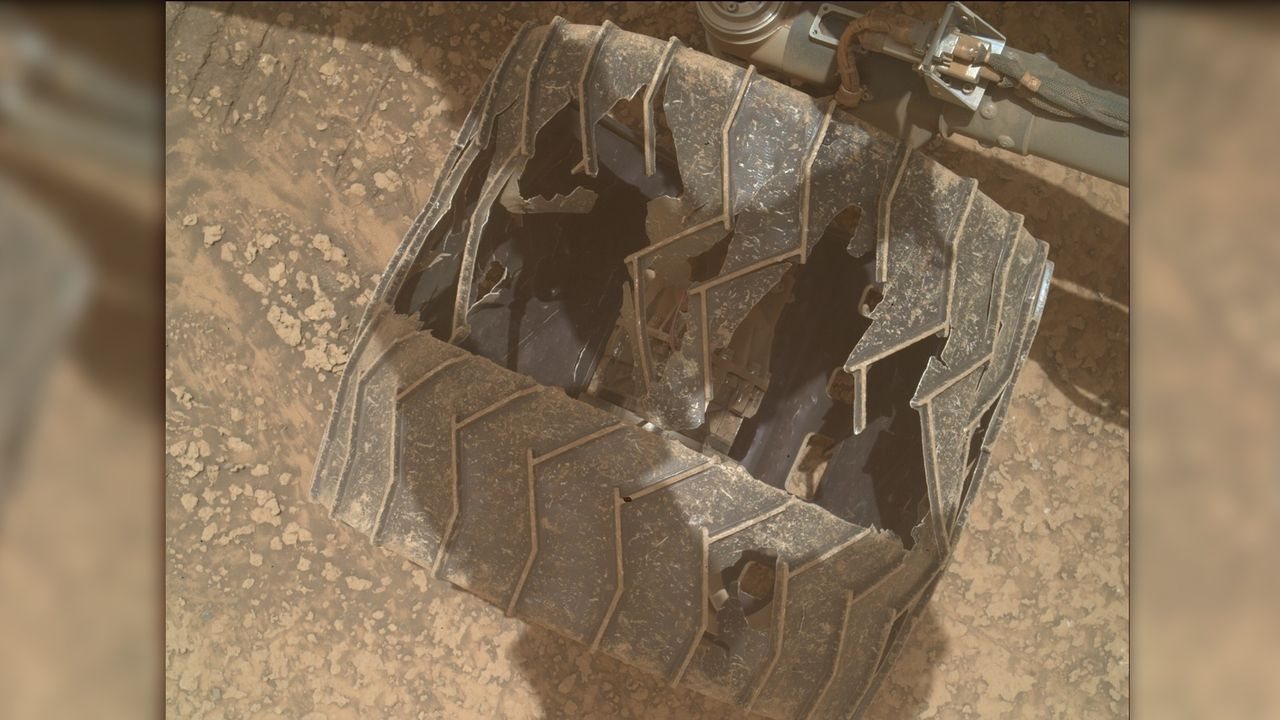
NASA's Curiosity Mars rover has once again turned its cameras on itself, capturing a detailed image of a cracked wheel as part of ongoing health checks on the aging vehicle. The photograph, released as a Space photo of the day, shows the rover's robotic arm maneuvering to inspect one of its six aluminum wheels, which have accumulated significant damage over more than a decade of traversing the harsh Martian terrain. The image offers a rare glimpse into the routine maintenance that keeps the mission going despite the punishing environment.
The wheel damage is not unexpected. Curiosity landed on Mars in August 2012 and has since traveled over 30 kilometers across the floor of Gale Crater, climbing the slopes of Mount Sharp. The terrain, littered with sharp rocks and jagged outcrops, has taken a toll on the wheels, which were originally designed to withstand punctures and cracks. Engineers at NASA's Jet Propulsion Laboratory have been monitoring wheel wear closely since early signs of damage emerged around 2013, adjusting driving routes to minimize further harm. The latest inspection, captured in the photo, is part of that ongoing assessment.
The image, taken by the rover's Mars Hand Lens Imager (MAHLI) on its robotic arm, shows a section of the wheel where cracks have formed around the treads. MAHLI is primarily used to study rocks and soil at close range, but it is also employed for engineering inspections. The new photo allows mission teams to compare the current state of the wheel with previous images, tracking the progression of damage. So far, Curiosity's wheels remain structurally sound, though the cracks are a reminder that the rover is operating well beyond its original two-year prime mission.
Curiosity's wheel design features a complex pattern of chevron-shaped treads called grousers, which provide traction on loose sand and rocky surfaces. Over time, these treads have broken in places, creating holes and cracks. The wheels are made of a thin aluminum skin with internal spiral supports, but the constant flexing and abrasion from sharp rocks have caused fatigue. NASA has developed specialized driving techniques, such as avoiding particularly rough patches and using the rover's suspension to distribute weight more evenly, to prolong wheel life.
The wheel inspection is one of several routine engineering checkups. Curiosity also monitors its power source, a radioisotope thermoelectric generator, which continues to provide reliable electricity. The rover's scientific instruments remain active, and it recently drilled into a new rock target on Mount Sharp to search for organic molecules and clues about ancient habitable environments. The health of the wheels is critical because Curiosity's ability to reach scientifically interesting sites depends on its mobility.
Curiosity is not the only rover facing wheel challenges. Its successor, Perseverance, which landed in Jezero Crater in 2021, uses a similar but improved wheel design with larger grousers and thicker aluminum. Perseverance has also experienced some wear, but not yet to the same degree. The lessons learned from Curiosity's wheel experience directly informed the design of Perseverance's wheels, demonstrating how engineering data from ongoing missions feeds into future spacecraft development.
The cracked wheel photo serves as both a technical report and a testament to Curiosity's longevity. The rover spent more than a decade exploring Mars, far exceeding expectations. It has discovered evidence of ancient lakes and streams, identified organic compounds, and measured radiation levels that will help plan future human missions. Even as its wheels show the scars of travel, Curiosity continues to send back valuable data, and the new inspection confirms that the rover still has enough traction to keep climbing.
NASA has not announced any immediate concerns about wheel failure. The mission team plans to continue using Curiosity for as long as the rover remains functional, likely for several more years. The cracked wheel image, while striking, is a routine part of the mission's operations and highlights the careful balance between exploration and preservation that defines long-duration robotic missions on other worlds.