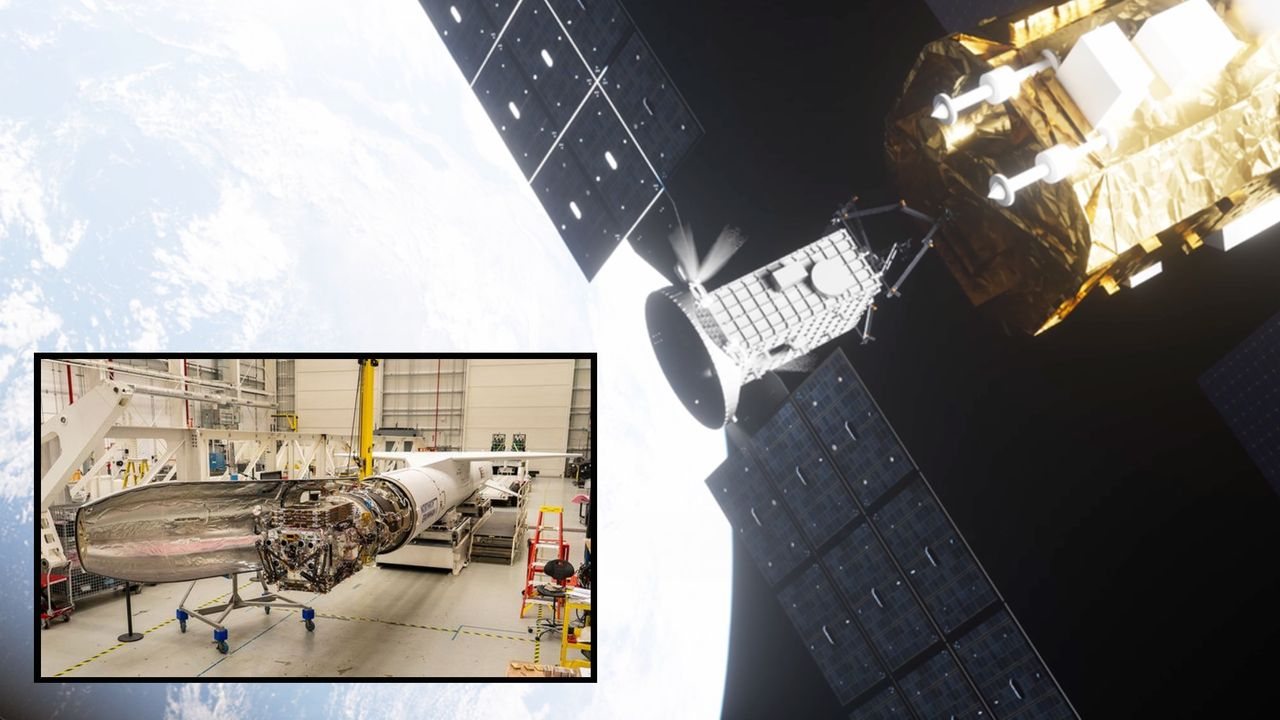
A NASA spacecraft designed to service aging satellites in orbit is now in urgent need of rescue after an unexpected propulsion problem jeopardized its own mission. The craft, launched as part of a pioneering effort to extend the life of valuable government assets in geostationary orbit, encountered the anomaly shortly after completing a series of initial orbital maneuvers. Engineers at NASA and mission partners are racing to diagnose the fault and determine whether the vehicle can be safely recovered.
The mission was conceived to demonstrate the feasibility of robotic satellite maintenance. Rather than allowing expensive communications and Earth-observation satellites to be abandoned after their fuel runs out or a minor component fails, NASA intended to prove that a purpose-built servicer could rendezvous with them, dock, and perform repairs or refueling in space. The current spacecraft was the first of its kind to attempt such an operation on an active government satellite. Its failure to operate nominally therefore carries significant implications for the future of on-orbit servicing.
According to sources close to the project, the propulsion issue was detected when telemetry showed an irregular pressure reading in one of the thruster systems. Subsequent analysis indicated that a critical valve may have failed to open correctly, preventing the flow of propellant to the main engines. Ground teams attempted to cycle the valve and run diagnostic tests, but the anomaly persisted. As a precaution, NASA placed the spacecraft in a safe configuration, pointing its solar arrays at the Sun and minimizing power consumption while engineers work through contingency plans.
The satellite that was scheduled to be serviced remains healthy in its nominal orbit. Its operator has confirmed that it continues to function normally and has not been affected by the servicer's problems. However, the delay in the servicing mission means the satellite may have to begin using its own remaining fuel sooner than expected, potentially shortening its operational life. NASA had planned to transfer some of the fuel from the servicer to the client satellite, a procedure that would have demonstrated a key capability for future missions.
This is not the first time that a spacecraft built for servicing has run into difficulties. Previous experimental missions, such as Japan's ETS-VII and the U.S. Air Force's Orbital Express, encountered their own technical challenges before eventually achieving their goals. What makes the current situation more pressing is the scale of the investment and the hope that on-orbit servicing would soon become routine for both government and commercial satellites. NASA had already begun studying a follow-up mission that would incorporate lessons from the current one; that timeline may now be delayed.
The spacecraft was launched aboard a commercial rocket from Cape Canaveral, Florida, after years of development and testing. Its payload included a robotic arm, a set of specialized tools, and tanks of hydrazine fuel that were to be transferred to the client satellite. The vehicle also carried cameras and sensors to guide it during the autonomous docking phase. All of these subsystems have been verified as healthy except for the propulsion problem. NASA officials have emphasized that the spacecraft itself is not lost, but the margin for recovery is narrowing as time passes.
Industry experts have noted that in-space servicing represents a paradigm shift for satellite operations. Currently, most satellites are designed to run until their consumables are exhausted and are then deorbited or moved to a graveyard orbit. A reliable servicer would allow operators to postpone those disposal maneuvers, upgrade payloads, or correct deployment anomalies. The current incident highlights the technical difficulty of building a spacecraft that can operate reliably for years, travel to a different orbit, and then perform precise robotic manipulation — all while avoiding damage to itself or the client.
NASA has not yet announced a deadline for resolving the anomaly. A review board is expected to convene in the coming weeks to evaluate all possible causes and recommend a recovery plan. Options range from a software patch that re-routes propellant flow to a more complex procedure involving a controlled thruster test. If the spacecraft cannot be restored to full capability, NASA may consider a reduced mission profile that forgoes the refueling demonstration but still practices approach and rendezvous maneuvers. Any such decision would be a disappointment, but would still yield valuable engineering data.
The broader space community is watching closely. Private companies such as Astroscale and Northrop Grumman have already begun their own satellite-servicing ventures, using different technical approaches. A successful recovery by NASA would validate many of the assumptions underpinning those commercial efforts. Conversely, a permanent loss could strengthen arguments for simpler, more robust designs and accelerate the push toward servicing-capable satellite buses from the start. For now, the spacecraft — once tasked with saving another satellite — must itself be saved.