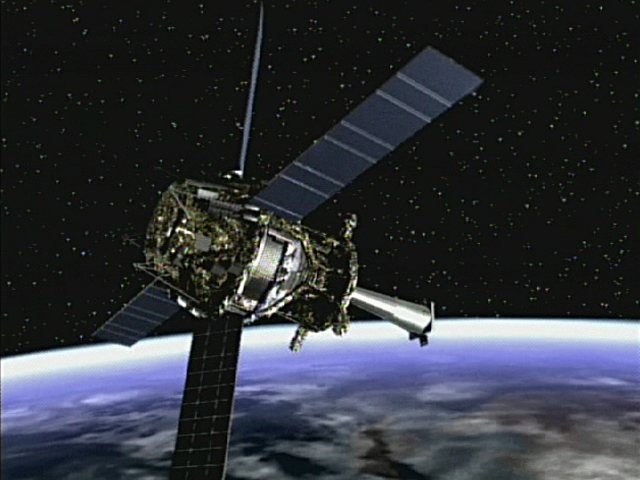
NASA's Neil Gehrels Swift Observatory is expected to re-enter Earth's atmosphere on Wednesday and burn up on the way down. The spacecraft, which has spent two decades studying some of the most powerful explosions in the universe, can no longer steer or observe, and its descent is uncontrolled.
Swift was designed to operate its three telescopes for only two years. Instead, it kept working far beyond that original mission, returning data on gamma-ray bursts, the intense flashes of high-energy radiation that signal some of the most violent events in the cosmos. Its instruments allowed astronomers to rapidly locate and study these bursts, making it one of the most productive observatories of its kind.
The mission's end follows a failed attempt to extend its life. Without the ability to control its orientation, the observatory has drifted out of position and cannot point its instruments at targets in the sky. With no means to raise its orbit, its altitude has continued to decline, leaving re-entry as the only remaining path.
Because the re-entry is uncontrolled, the precise location where debris may land cannot be predicted in advance. Most spacecraft of this kind are expected to break apart and burn up during descent, but some components may survive and reach the surface. The risk to people on the ground from re-entering satellites is generally considered very low, given that most of Earth's surface is ocean or uninhabited land.
Swift was built to detect gamma-ray bursts and quickly relay their positions so that other telescopes around the world could observe the fading afterglows. That rapid-response capability made it a cornerstone of time-sensitive astronomy, and its data have informed research across astrophysics for two decades. Its retirement closes a long chapter in space science, even as the spacecraft's final hours in orbit approach.
The re-entry is expected to be watched closely by the space community, which tracks the orbital decay of defunct satellites to anticipate where and when they will return. For a mission that was never meant to last this long, the observatory's extended service stands as one of the more productive legacies of NASA's high-energy astronomy program.
Source: theguardian.com
15