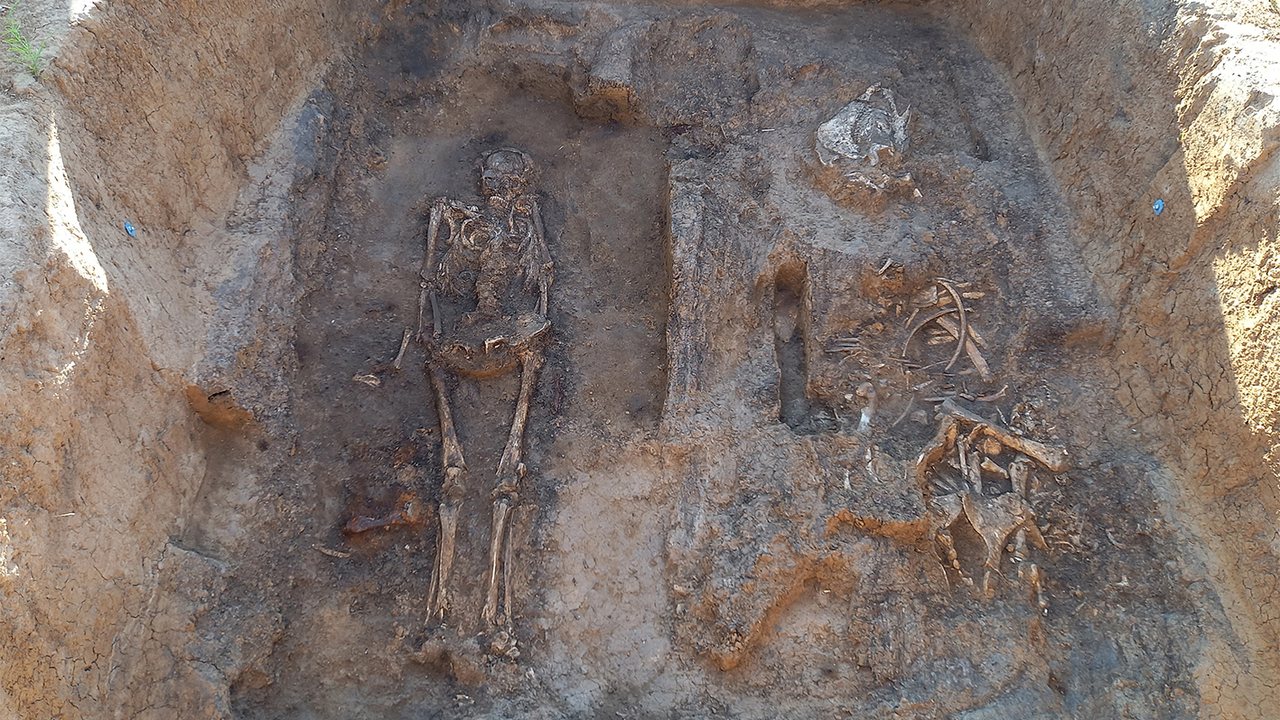
Archaeologists in Russia have uncovered a medieval nobleman buried in a rare wooden tomb alongside his horse and dog, a discovery that sheds new light on funerary practices among the region's elite during the Middle Ages. The find, made during an excavation in the western part of the country, is being described as highly unusual because of the preservation of the wooden structure and the inclusion of animals in the burial.
The tomb, constructed from timber, contained the skeletal remains of a man believed to have held high social status, based on the elaborate nature of the grave and the presence of the animals. Researchers suggest that the horse and dog were likely sacrificed or chosen to accompany their owner into the afterlife, a practice documented in various medieval cultures but rarely observed in such a well-preserved context. The wooden chamber, which has survived centuries underground, is considered a significant find because organic materials of this kind typically decay over time, leaving archaeologists with little more than soil stains or fragments.
Excavation teams working at the site carefully removed layers of earth to reveal the tomb's structure, which appears to have been built specifically for the burial rather than repurposed from another use. The nobleman's remains were found in a supine position, with the horse placed nearby and the dog positioned at his side, according to preliminary reports from the dig. Artifacts recovered from the grave, including items that may have been personal possessions or ceremonial objects, are now undergoing analysis to determine their origin and purpose.
The discovery adds to a growing body of evidence about medieval burial traditions in the region, where social hierarchy often dictated the complexity of graves and the goods interred with the deceased. While horse burials have been documented in other parts of Europe and Asia, particularly among nomadic and warrior cultures, the combination of a wooden tomb, a horse, and a dog in a single grave is rare for this area. Archaeologists involved in the project have noted that the find could help clarify the cultural influences and trade connections that shaped local practices during the medieval period.
Dating of the tomb is still underway, but initial assessments place it within the medieval era, a time when the region was characterized by shifting political boundaries and the spread of various religious and cultural traditions. The wooden construction of the grave suggests access to significant resources, as timber would have required considerable labor to cut, shape, and assemble into a burial chamber. This has led researchers to hypothesize that the individual was a member of the local nobility, possibly a landowner or a figure of military importance, though no inscriptions or identifying markers have yet been found.
The site where the tomb was discovered has yielded other archaeological material in the past, indicating that the area was used for settlement and burial over an extended period. Future work will focus on preserving the wooden remains, which are fragile after centuries in the ground, and on conducting further analysis of the human and animal bones. Isotopic studies could reveal details about the nobleman's diet and geographic origins, while DNA testing may provide information about his ancestry and possible familial connections to other individuals buried nearby.
Researchers have emphasized that the excavation is still in its early stages and that more findings may emerge as work continues. The tomb's rarity, however, has already made it a notable contribution to the understanding of medieval society in this part of the world, offering a tangible link to the beliefs and customs of a population that left few written records. For now, the nobleman, his horse, and his dog rest in the care of archaeologists, who are working to piece together the story of their final journey.
84