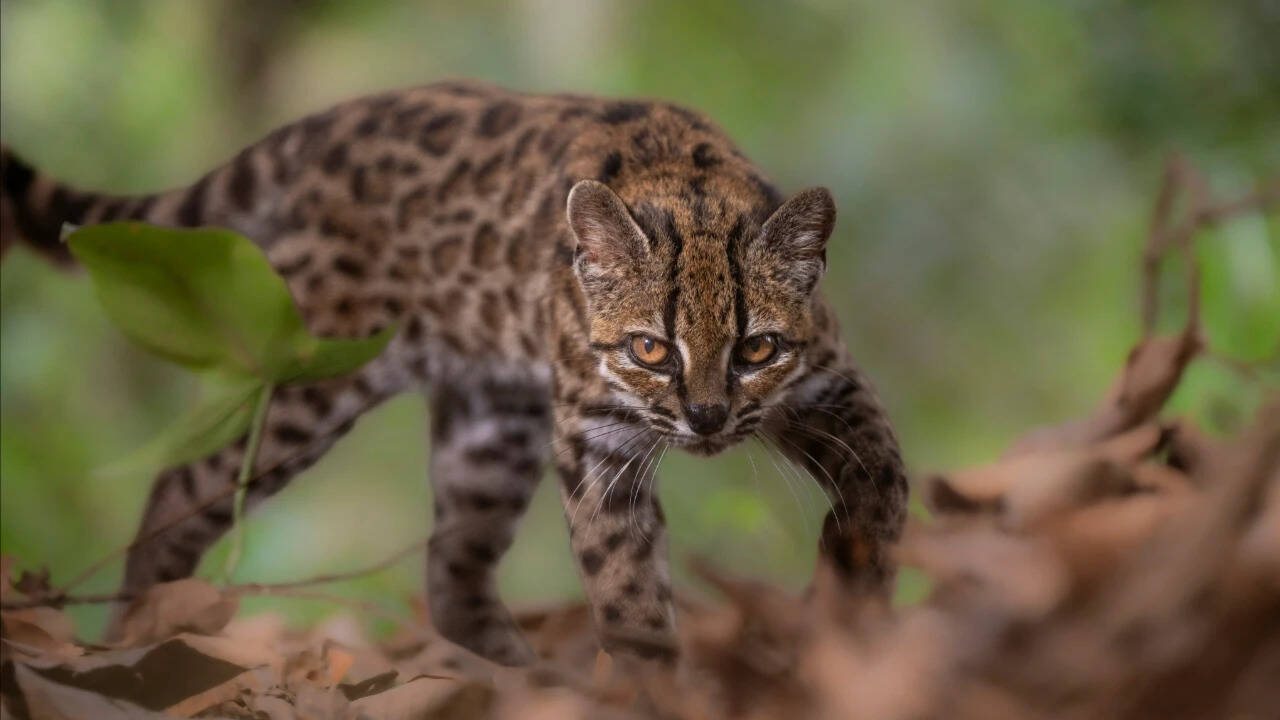
A spotted wildcat in Bolivia has been identified as a new species, according to researchers who say it was long mistaken for a close relative. The finding, published in a scientific journal, adds a new branch to the feline family tree and raises immediate concerns about the animal's survival, as only one living member is currently known.
The cat, which has a spotted coat and a robust build, was previously thought to belong to a widespread species of wildcat found across South America. Genetic analysis and morphological comparisons revealed enough differences to classify it as a distinct species. The research team has not yet assigned a common name, but the scientific name is expected to be announced after further review.
The single known living individual was recorded in a remote region of Bolivia, though exact location details are being withheld to protect the animal from disturbance. Camera traps and field surveys had captured images of the cat over several years, but it was only after tissue samples were analyzed that the species status became clear. The samples came from a deceased individual and from scat collected in the field.
«This is a remarkable discovery, but it is also a sobering one,» said one of the researchers involved in the study. «We know almost nothing about its population size, its range, or the threats it faces.» The team is calling for immediate follow-up surveys to determine whether other individuals exist and to assess the species' conservation status.
Wildcats in South America face mounting pressures from habitat loss, agricultural expansion, and retaliatory killing by farmers who blame them for livestock losses. The new species, if it is as rare as current evidence suggests, could be among the most endangered felids in the world. Conservation groups are urging the Bolivian government to prioritize protection measures and to support further scientific work.
The discovery also underscores how much remains unknown about biodiversity in the Neotropics. Many species in remote forests and highlands have never been formally described, and some may disappear before they are identified. Researchers say the case of the Bolivian wildcat is a reminder that taxonomy and field ecology remain essential tools for conservation.
Further genetic studies are planned to confirm the species' evolutionary relationships and to estimate how long it has been isolated from its closest relatives. The team hopes that additional individuals will be found, but they acknowledge that time may be short. «We are in a race to understand this cat before it is too late,» the researcher added.
The finding has been welcomed by biodiversity experts who say it highlights the importance of continued investment in basic research. Without such work, they argue, species can slip toward extinction unnoticed. The Bolivian wildcat now joins a growing list of newly described mammals that are already at risk.