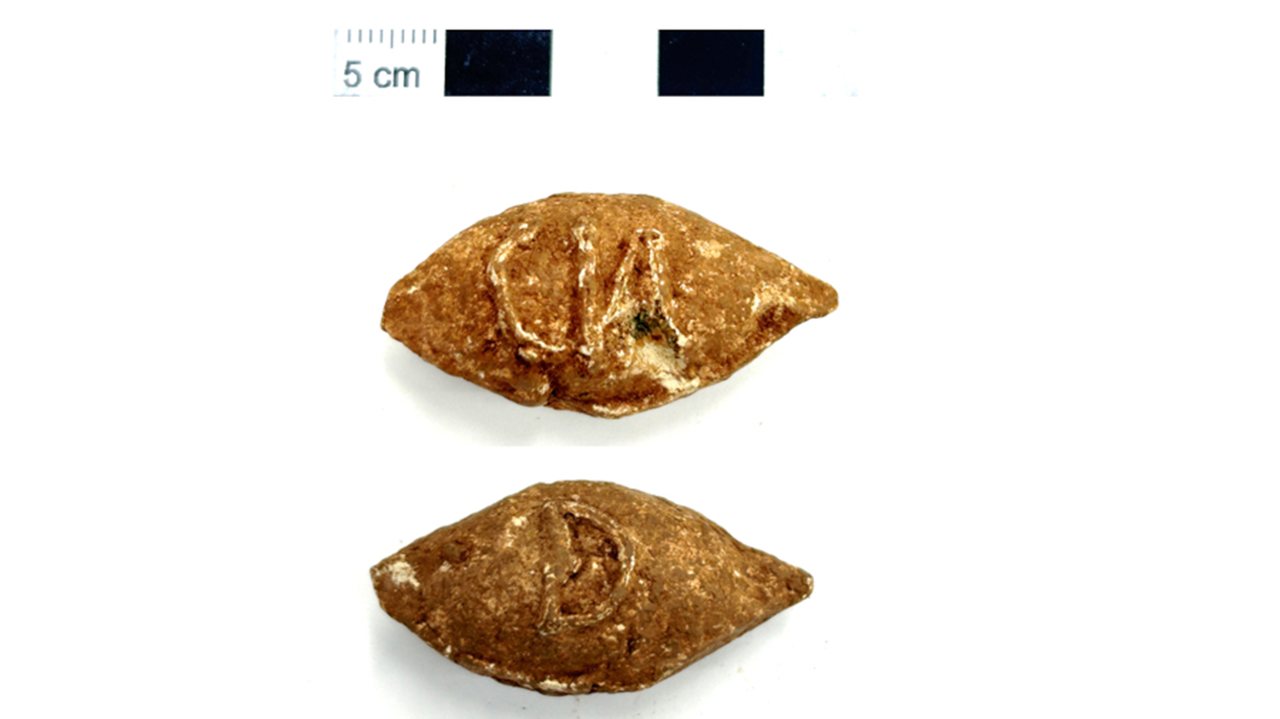
Lead projectiles recovered in the Spanish Pyrenees have helped archaeologists pinpoint where a Roman camp lay hidden before it was ambushed. The small bullets, scattered over the ground at a high mountain site, are among the clearest traces left by a sudden attack on Roman soldiers in the mountain range.
The evidence points to a temporary military position, the type Roman troops built during campaigns through hostile territory. Such camps were usually fortified with ditches and ramparts, but because they were made of wood, earth and turf, their outlines are rarely visible today. In this case, it was the ammunition left behind during the confrontation that revealed where the soldiers had been stationed.
The projectiles are consistent with sling weapons, simple but effective arms used by both Roman and enemy forces. They could be produced quickly and fired in large numbers, making them well suited to close-range fighting in broken terrain. Their location at the site suggests fighting took place near the camp itself, matching the idea of an ambush rather than a pitched battle on an open field.
The Pyrenees formed a natural barrier between the Iberian Peninsula and the rest of the Roman world. Armies moving between Spain and southern Gaul had to cross narrow passes and steep valleys, where local peoples could strike from high ground and disappear before a counterattack could be organized. The newly identified camp appears to lie along one of those vulnerable routes, a reminder that even well-trained Roman forces could be caught off guard in unfamiliar mountain country.
The discovery also illustrates how difficult it is to find Roman marching camps. Most were occupied for only a short time, sometimes a single night, and were built from materials that decomposed long ago. Metal objects such as sling bullets survive far better, and their distribution can show where opposing forces positioned themselves. Small finds of this kind are often the only evidence that a battle or ambush took place at a particular spot.
For archaeologists, the site adds a new piece to the broader picture of Roman military operations in the Pyrenees. It shows that the Roman army pushed deep into terrain that favored local defenders and that conflict in the mountains was more common than written records alone suggest. Further study of the projectiles and the surrounding landscape may eventually reveal more about the size of the Roman force, the identity of its attackers and the precise course of the ambush.
The find is a reminder that some of the most important historical discoveries come not from grand monuments but from small objects dropped or discarded in moments of danger. A handful of lead bullets, overlooked for centuries in the Spanish mountains, has brought a forgotten episode of Roman military history back into view.